Chapel Hill 2035

[UPDATE] The Chapel Hill News’ OrangeChat noted the growth Mar. 5th.

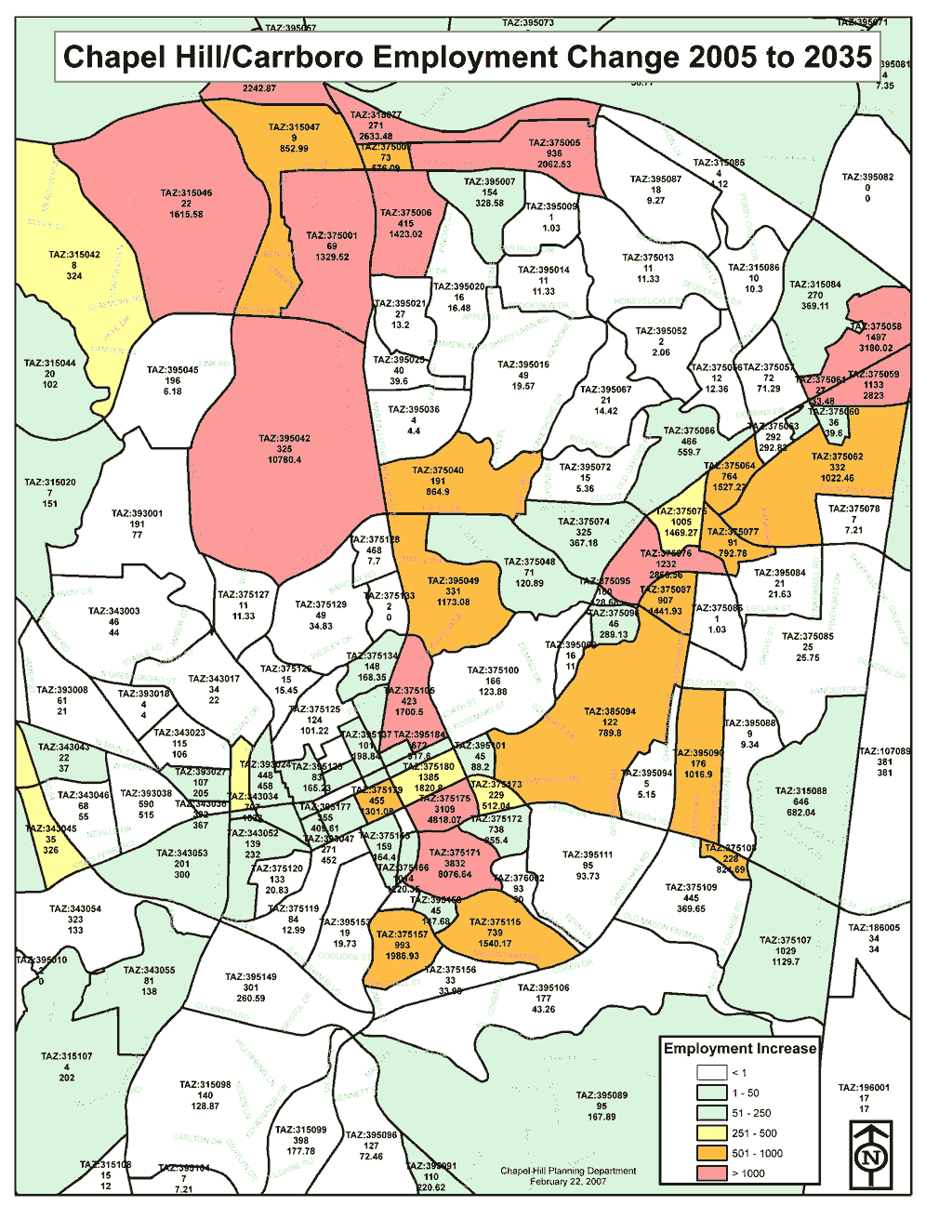
The Durham-Chapel Hill-Carrboro Metropolitan Planning Organization 2035 Long Range Transportation Plan Socio-Economic projections are in and, as Sally notes, they forecast a whopping increase in population.

Table 1: Draft 2035 Plan Socio-Economic Projections

Jurisdiction

Population

Employment

2005

2035

% inc.

2005

2035

% inc.

Chatham County*

34,629

153,362

343%

8,196

16,953

107%

Durham County

229,796

370,007

61%

172,825

308,886

79%

Carrboro

21,328

26,879

26%

4,320

6,751

56%

Chapel Hill

52,394

81,297

55%

35,314

81,227

130%

Hillsborough

12,651

22,613

79%

5,762

14,606

153%

Orange County**

43,739

55,537

27%

3,946

7,255

84%

*Includes the portion
of Chatham County that is in the Triangle Regional Model area.

55% increase in population, 130% in employment! 81,297 folks living in Chapel Hill with employment at 81,227 seems to indicate quite a few folks will be coming from out of town. If you review their maps, it also appears that UNC’s Carolina North plays a huge role in that projected employment increase.

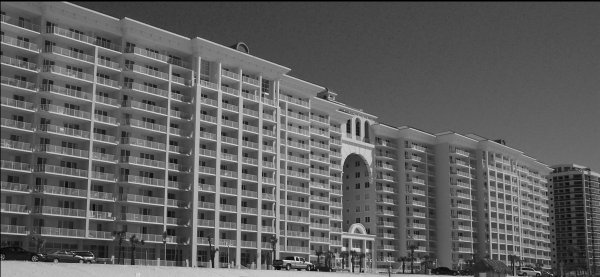
Whatever the reliability of the projections, and coming on the heels of Council’s dreadful and precipitous decision to create a TC-3 zone allowing 120′ tall buildings, I hope our fair Downtown doesn’t end up looking like this:

Giving Kiosk Out, Panhandling Meters In?

Last year, the Downtown Partnership (DPC) commissioned a “giving kiosk” for Downtown. Callie Warner, my neighbor and metalsmith, designed what Liz Parham, Direcor of the DPC, described in this May 16th, 2006 Chapel Hill News column [PDF] as an “economic development tool”:

This past week the Chapel Hill Downtown Partnership carried a concept proposal for a privately funded “Giving Kiosk” to the Town Council for review. The purpose of the Giving Kiosk is to provide downtown visitors with an alternative to giving money to panhandlers by directing their giving to human service agencies that provide beneficial services to those that are in need in the downtown area; to educate the public on the services that are needed and those that are offered; and to educate the public on how social and behavioral issues are hindering the economic vitality of downtown and our community’s growth.

The Chapel Hill Town Council saw this more as an “art project” – introducing a bureaucratic muddle as local curmudgeon Roland Giduz noted last June

This plan is to install a giving kiosk is as an alternative to donating to panhandlers. It will be completely privately financed. It won’t cost taxpayers a penny and should relieve the popularly perceived image of beggars harming the aura of Chapel Hill’s public shopping area.

An anonymous donor has offered to pay the $17,000 construction cost of building and installing this small sidewalk structure downtown. As tried and used elsewhere in similar circumstances, it offers people the option to contribute to designated charities instead of enabling panhandlers. The Chapel Hill Town Council recently considered this proposal, seemed to like it, and commissioned a local artist to submit a design. The resulting design by Callie Warner shows a securely- built rectangular structure, simply roofed and with slots for contributions. It is purely a functional kiosk, both in design and appearance.

As all too often happens when something is caught in the maw of bureaucracy, the kiosk idea has been shoved aside ‘til it can be considered as art, rather than as a functional structure. It now awaits a decision — yet-to-be considered or approved – as to whether it is art instead of a simple structure for its intended purpose. Until then there’ll be no giving kiosk and no donation of it or to it.

In the past, I’ve been critical of some of the harsher aspects of Denver’s Give a Better Way campaign , echoing our local Council champion of homelessness causes Sally Greene’s concerns :

Narayan thus argues, and I agree, that a concern that the presence of panhandlers in a downtown district discourages foot-traffic and therefore undermines the economic health of downtown is not a morally valid reason for the further regulation of panhandling.

On the other hand, the impulse behind the idea of the giving kiosk had much to recommend itself. I think it represented a genuine wish to be helpful, to reach out as a community to help those in need. The trouble is that we don’t have natural connections with panhandlers; they appear to us as strangers, one at a time, seemingly cut off from the community. We really don’t know what a pandhandler will do with the dollar we give him, and we have reason to fear the worst. The initiatives that the Downtown Outreach Work Group is about to embark on are potentially good ones–as long as they include a recognition that in the end we cannot control the lives or wills of others, that not every panhandler is dishonest or deceitful, that there is genuine need staring us in the face. (The Denver program’s home page is pretty harsh: a picture of an upturned palm, inscribed, “Please help. Don’t give.”)

Yes, the impulse to give, to help is commendable and should be nurtured.

That’s why I’m willing to follow Denver’s lead while Council works out the finer points of art, and suggest we trial Denver’s practical approach of using recycled parking meters to collect funds:

The city of Denver has recycled old parking meters to help in the fight against homelessness.

The old parking meters have been placed at various locations in downtown, including Skyline Park.

The idea is to encourage people to put the money into the parking meters instead of giving to panhandlers. Money raised from the meters will go to organizations fighting homelessness.

Mayor John Hickenlooper said the city’s 10 year plan to end homelessness is working.

“Denver’s 10 year plan to end homelessness, what we call Denver’s road home, has really become a national model,” Hickelooper said. “I think we’ve had the greatest success in getting the whole community to buy in, to believe this is something we can tackle as a community.”

Officials unveiled 36 of the homeless meters on Monday.

Denver’s CBS4 Mar. 5th, 2007

The lede of this story – “help[ing] the fight against homelessness” – highlights yet again an unfortunate conflation between panhandling and homelessness.

They’re not equivalent.

I hope that it is a distinction the Chapel Hill Downtown Partnership Work Group on Homeless shares as they move forward.

CAMPO’s Racetrack 5 Miles Long

The Durham-Chapel Hill Carrboro Metropolitan Planning Commission (DCHC-MPO) has formed a special advisory task force in conjunction with Capital Area Metropolitan Planning Organization (CAMPO) “to recommend a plan for major transit investments in the Triangle area.”

Their charter?

This commission will play a critically important role in the development of a unified vision for future transit investments in the Triangle area. The recommendations that the commission develops will be forwarded to the Transportation Advisory Committees (TACs) of both the DCHC MPO and the CAMPO for use in the formulation of their Long Range Transportation Plans.

Thanks to Patrick McDonough for the heads up.

Part of their agenda is to reevaluate the Triangle Transit Association’s (TTA) Regional Rail plan.

Though not averse to appropriate rail deployments, I’d like to see our community support the cheaper, more flexible Bus Rapid Transit (BRT) approach before plunging back into a rail-centric system.

Regional transit policy needs an “evergreen” process to address our community’s rapidly changing needs.

The commission membership has some real local talent, including former Council member Gerry Cohen (of the excellent NC Bill Drafting ‘blog) and Chapel Hill Planning Board member George Cianciolo (GeorgeC on OP).

Gerry kindly fills out the list of appointees:

Here is the membership list of the new 4 county transit planning committee, CAMPO are the Wake/Johnston appointments, DCHC-MPO are the Durham/Orange appointments. Bio sketches are from the staff memoranda.

CAMPO:

Bill Cavanaugh, (Co-Chair)
Former chairman, chief executive officer, and president, Progress Energy Chairman of the World Association of Nuclear Operators (WANO) Member of the National Academy of Engineering Board of visitors at the University Of North Carolina Kenan Flagler School Of Business Advisory Board of Tulane’s School of Engineering Board of Directors for Research Triangle Foundation

Smedes York, (Co-Vice Chair)
Mayor, City of Raleigh, 1979-1983 Raleigh City Councilman, District E, 1977 to 1979. President of York Properties, Inc. Board Chairman York Simpson Underwood and McDonald-York Past chairman of the North Carolina Citizens for Business and Industry Past chairman N.C. State University Board of Trustees Board of Directors of the Research Triangle Foundation YMCA of the Triangle North Carolina Amateur Sports Trustee of the Urban Land Institute Founding Co-Chair of Regional Transportation Alliance

Tom Bradshaw
Mayor, City of Raleigh 1971-1973 Secretary of N.C. Dept. of Transportation, 1976 – 1979 Member – Blue Ribbon Commission on the Future of Wake County Managing Director, Public Finance Dept., CitiGroup Global Markets, Inc.

Daniel Coleman
Attorney, Liveable Streets Partnership, Raleigh-Wake Citizens Association

Trish Dowty
Vice President of the Corporate Services Division, SAS Property, Procurement, and Logistics Management, CTI Data and Denelcor, Inc. Board of Directors, Cary Chamber of Commerce

Greg Flynn
NC Dept of Public Instruction School Planning NC Division of Forest Resources Architect

Mike Hendren
Wake Forest Chamber of Commerce.Board of Directors, Chair of the Government Affairs Committee

Jodi LaFreniere
Morrisville Chamber of Commerce President Member – Business Alliance Leadership Team Member Regional Transportation Alliance

Jennifer Lewis
Graduate Research Asst., Department of City and Regional Planning, UNC-CH Transportation Planning, Town of Chapel Hill Transportation Planner, The Louis Berger Group

Rusine Mitchell-Sinclair
Vice President at Large – North Carolina Electronics and Information Technologies Association (NCEITA) Regional Transportation Alliance – Vice chair of Regional Leadership Senior State Executive, VP Strategy & Implementation, Global IT Delivery – IBM

Mack Paul
Past President – Triangle Tomorrow Chief of Staff and legal counsel to Lieutenant Governor Dennis Wicker Associate General Counsel for Blue Cross and Blue Shield of North Carolina

Warren Sawicki
Fuquay-Varina – Chamber of Commerce Retired Manufacturing Executive

Frank Timberlake
R.F. Timberlake and Company
President Carolinas/Virginia Chapter NAMA (National Agri-Marketing Association)

Ed Willingham
2006-07 chair of the Regional Transportation Alliance Executive Vice President for First Citizens Bank’s Triangle Region

Frank Price
President of F. L. Price & Associates Chair – Clayton Planning Board

Gerry Cohen
Director of Legislative Drafting, NC General Assembly Former Member-Chapel Hill Town Council Former Member-Chapel Hill Transportation Board

Tim Reed
Conservation Co-Chair of the Capital Group Sierra Club

Ex Officio Members:
Joe Bryan
Chair, Capital Area MPO TAC Commissioner, Wake County

Charles Meeker
Vice Chair, Capital Area MPO TAC Mayor, City of Raleigh

John Brantley
Director, RDU International Airport Commission member – Blue Ribbon Commission on the Future of Wake County

Rick Weddle
President and CEO of the Research Triangle Foundation Vice Chair for Governmental Affairs – Regional Transportation Alliance Commission member – Blue Ribbon Commission on the Future of Wake County

=========================

DCHC_MPO appointees (Durham/Orange)

Cassandra Atkinson, Ph.D.
Adjunct Associate Professor, Department of Public Administration Director of Community Research and Technical Assistance Initiative Project Director, Transportation Management Bachelor’s Degree Program North Carolina Central University (Chancellor Ammons’ nominee) She has written several grants with the NC Department of Transportation and conducted research on transportation management needs.

George Cianciolo, Ph.D. (Co-Chair)
Member, Chapel Hill Planning Board Member, Chapel Hill Community Design Commission Former chair and member, Chapel Hill Transportation Board (six years) Former member, University of North Carolina Leadership Advisory Committee Associate Professor of Pathology, Duke University Medical Center

Carolyn Elfland
Associate Vice Chancellor for Campus Services University of North Carolina at Chapel Hill (Chancellor Moeser’s nominee) The University’s transportation planning, transportation demand management, and transit functions are within her area of responsibility. Member of the partnership committee that guides the Chapel Hill Transit system Represented the University on the 15-501 and 54 corridor studies

Robert (”Bo”) Glenn
Chair, Durham Open Space and Trails Commission Member, Durham Bicycle and Pedestrian Commission Member, Tarwheels Bicycle Club Served on the Durham Housing Authority for over 20 years Senior Budget Analyst, Office of the Governor, State Budget and Management Former Congressional Fellow for Rep. Earl Blumenauer (Portland, Oregon) Master’s in Regional Planning and Public Administration

Chris Harder
Vice chair, Durham Area Transit Authority (DATA) Board

Cal Horton
Former Town Manager (16 years, until 2006), Town of Chapel Hill As Manager, he has been a regional leader on transportation issues.

Sandy Ogburn
Member of the Board of Directors of several organizations in the Durham community, including the Durham Community Land Trust and the West End Community Center Former member of the Durham City Council, the Durham-Chapel Hill-Carrboro MPO, and the Triangle Transit Authority Board of Trustees

Bernadette Pelissier, Ph.D.
Chair, Orange Chatham Group of the Sierra Club Member, Orange County Planning Board Member, Orange County Commission for the Environment Former member, University of North Carolina Leadership Advisory Committee Ph.D. in Sociology. Recently retired from the Federal government

Roger Perry
Chair, Triangle Tomorrow President, East West Partners (member of the Chapel Hill-Carrboro Chamber of Commerce and the Regional Transportation Alliance) Member, Board of Trustees, University of North Carolina at Chapel Hill Served on the Board of Visitors of UNC and Executive Committee of the Center for Real Estate at UNC’s Kenan Flagler School Past chair, Triangle United Way

Mike Shiflett
Member, Durham Inter-Neighborhood Council, Northgate Park Member, Board of Directors for the Coordinating Council for Senior Citizens President and CEO, American Labor (member of the Durham Chamber of Commerce and the Regional Transportation Alliance) Member, Durham Chamber of Commerce, Transportation Committee Served on US 40 HOV task force, Durham Comprehensive Plan, Travel Demand Ordinance Task Force Former member, Orange County’s Economic Development District Transportation Task Force

Holly Reid
President, Board of Trustees, Eno River Association Co-Founder, Walkable Hillsborough Coalition

Sam Nichols Jr.
Senior Vice President, First Citizens Bank Durham Chamber of Commerce, Transportation and Economic Development Committees

Ex-Officio Members:

TAC Chair, Alice Gordon (Orange County Commissioner)
TAC Vice Chair, Becky Heron (Durham Coounty Commissioner)

TTA has entered the ‘net realm in soliciting community feedback with their online Design Game.

You can vote your wallet on transit priorities there through March 9th, 2007. The choices are a bit slim but at least you can lend your weight towards options you endorse.
Not Everyone Walks Across the Crosswalk

Ellen, a small step in the right direction.

From the Liz at the Downtown Partnership

The Chapel Hill Public Works Department with assistance from White Oak Construction will be replacing handicap ramps at prominent downtown crosswalks in the following locations beginning on March 12:

* Franklin Street at Columbia Street
* Mid-block crosswalk at Porthole Alley and
* East Franklin at Henderson Street
* Entrance and exit for Parking Lot 3 in the 400 block of West Franklin Street

Replacement of existing handicap ramps is required for the Town to come into compliance with the Americans with Disabilities Act. The Town plans to begin this project during the University’s spring break in anticipation of reduced traffic volumes downtown. In an effort to further minimize inconvenience to pedestrians, demolition work will be scheduled at night.

Concrete pours will take place before 8:00 a.m. whenever possible; however, a crosswalk undergoing ramp construction will be closed to allow concrete to cure. Consequently, pedestrians may be temporarily redirected to the next available street crossing. As part of the ramp replacement project, it may be necessary for space at the curb to be reserved for construction parking and staging.

During ramp construction at Parking Lot 3, the parking lot will remain accessible to vehicles. Pedestrians will be able to continue along the sidewalk on the south side of West Franklin Street with a minor detour around the work zone.

Weather permitting, the project may be completed before March 23, 2007.

Questions or concerns may be directed to Harold Harris at the Public Works Department, 612-9560.

Not everyone walks across the street, nice to see we’re working the issue.

Next stop Rosemary?