All posts by WillR

IFC Men’s Shelter: Not Until Questions Have Been Answered

According to today’s Chapel Hill News (IFC may delay new shelter), the Inter-Faith Council is looking at a delay while the questions raised by local residents over the last few weeks are resolved.

Inter-Faith Council director Chris Moran said the agency may delay its development permit application amid neighbors’ opposition to a new men’s homeless shelter on Martin Luther King Jr. Boulevard at Homestead Road.

Despite support from United Church of Chapel Hill, which is adjacent to the site, Moran faced a throng of red-clad protesters as the Town Council reviewed IFC’s concept plan for a 50-bed shelter last week. These neighbors anticipated homeless men loitering, panhandling or causing other mischief around their homes, schools and Homestead Park — basically, the same complaint some downtown merchants and visitors have expressed about the street people downtown.

The council challenged IFC to address these concerns and explain how the agency chose the Homestead site. For example, IFC is seeking detailed crime data from the police department for its Rosemary Street shelter.

That sort of research could disrupt IFC’s initial plan to gain a permit about a year from now and open the doors in January 2012.

“We will probably delay the special-use-permit process,” said Moran. “It would be disrespectful for us to file for an SUP permit if these questions haven’t been answered.”

I asked Police Chief Curran a couple weeks ago for some of the required statistics (here).

I’ve read every email forwarded to the candidates on this issue with an eye towards publishing those questions for inspection by the wider community.

Luckily, Tina Coyne-Smith, one of the concerned citizens that has taken a lead on this issue, prepared a detailed assessment of the neighborhoods’ issues for her presentation to Council last week.

She has also graciously provided a copy (here [PDF]) so that the public, the IFC and other stakeholders can review and respond in a fact-based manner.

The three categories of concerns driving opposition are:

  1. Proximity of the shelter to a park, residential neighborhoods, and daycares, afterschool programs, and schools
  2. Unintended consequences of the shelter that raise safety concerns
  3. Inequitable distribution of human services in NW Chapel Hill incurred by placing the shelter at the proposed site

A few of the underlying issues raised have been answered by Chris Moran in the FAQ he provided earlier here (Q&A IFC Community House).

I also recently asked the Town’s Attorney Ralph Karpinos if the IFC, in cooperation with the police, could rule out who on the list of incidents was not a shelter resident. Anecdotal evidence indicates that folks report their address as the shelter even when they aren’t clients. He responded that this was a question for the IFC.

While I believe there is value in sharpening up the statistics, I also want to protect the privacy of those that IFC serves. Any method the Town uses to get a better grasp of the scope of this potential problem must honor folks right to privacy.

Whatever the outcome of the current discussion, the process used must be transparent, fact-based and use a decision-making framework that incorporates the requirements of the IFC, community-based criteria (as with the waste transfer site selection), the Town’s legal and developmental guidelines along with a strong dose of common sense.

Given the respectful tone established by Tina, Chris and many of the other folks that spoke last Monday, I believe that our community can not only reach a consensus on this particular issue without bitterness but also take this opportunity to work even harder on addressing the problems driving and accompanying homelessness in our local community.

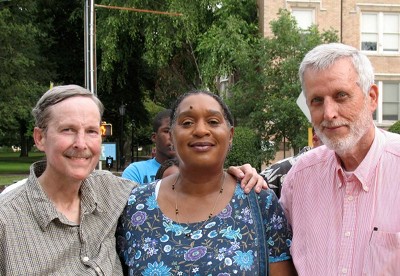
Rev. Robert Campbell’s Letter

I first met Rev. Robert Campbell, an incredibly dedicated advocate for the Rogers/Millhouse community, over 8 years ago. At the time I was attending one of my first Council meetings.

Fred Battle, then President of the local NAACP (and member of the Hank Anderson Breakfast Club), had presented a compelling case for extending sewer and water to the Rogers Road community on the basis of promises made by Chapel Hill’s Mayor Lee decades before. The community had been told that if they accepted the landfills, the County and the Town would provide mitigations, including proper sanitation and potable water, to offset those burdens.

I was moved by Fred’s and Robert’s words that evening, wished I could lend a helping hand. I introduced myself, apologized that as a longtime resident and part of the problem I had not known of their plight and done more to help. Luckily I’ve since had an opportunity to make amends.

The last 4 years Robert, Neloa Jones and many of other other folks working to lift the burden off of this community have set an example that I strive to follow. It is a true welcoming gift that they’ve invited my service on their behalf.

Unfortunately, eight years on, we are still dealing with some of the same issues. The Council this Spring pledged to form a working group to resolve this long owed debt but that pledge, like Mayor Lee’s of decades ago and Mayor Foy’s of this Spring, remains unkept.

Robert wrote this stirring endorsement of my candidacy which appeared in the Chapel Hill Herald and at the IndyWeek.

Thank you Robert for the very kind words:

Raymond has vision; is the voice town needs

Will Raymond is a person that knows the issues and the effect it has on policies making in local government. Will has been and still will advocate for social and environmental justice. Will is one who sees the importance of citizens’ voices and will be the voice of those that are not at the table where decisions are made that affect them.

We are at a critical point in planning for our future of our town. Construction will soon begin in a Chapel Hill planning district, a waste transfer station is part of the development which must be addressed. Will Raymond knows our roads, schools, housing and right to basic amenities will be on the minds of citizens.

Local and political education, accountability, honesty and democracy are the keys to transparency in government. A vote for Will Raymond is a vote for Green initiative and sustainability. We need new vision on the town board. Make the right decision and vote for Will Raymond, a man that sees from within and not from without, one who has been at the meeting and has seen and heard the voice of the people.

I, Robert Campbell, call for all friends, family members, church members, citizens and veterans to vote for community service and experience. Vote for Will Raymond.

Robert Campbell
Chapel Hill

Yonni Chapman

Yonni Chapman, local historian, stalwart civil rights activist, documenter of Chapel Hill’s struggles for peace, justice and equality, after a long struggle with cancer, has passed on.

I last saw Yonni Aug. 28th at the commemoration of Chapel Hill’s new Peace and Justice Plaza. We talked awhile about the possible Board of Commissioner’s decision to site the new trash transfer facility in the Millhouse/Rogers Road community.

Fighting for consideration of social justice in the decision-making process of siting the transfer facility was just one of many local issues that Yonni helped our community address. He reminded us of the historical context, stressed that we cannot move forward if we forget where we’ve been.

From Yonni’s on-line profile

Privileged white child of the sixties. Became a revolutionary in 1969 at Harvard. Moved to Atlanta to do social justice organizing. Attended Atlanta Area Tech and became a Certified Laboratory Technician. Moved to Chapel Hill area. Worked in Hematology at UNC Memorial Hospital. Chair of Employees Forum. Did grassroots organizing in Chapel Hill with Welfare Rights Organization, CH Tenants Organization, hospital and university workers, Rainbow Coalition of Conscience, Jesse Jackson Campaign, Fred Battle Campaign for School Board, African Liberation Support Committee, Medical Aid for Southern Africa, Central America solidarity campaigns, anti-Apartheid movement, etc. Attended graduate school at UNC in history. Thesis, 1995, Second Generation: Black Youth and the Origins of the Chapel Hill Civil Rights Movement, 1937-1963. Dissertation, 2006, Black Freedom and the University of North Carolina, 1793-1960. Expert Witness for UNC Housekeepers Movement lawsuit; organized campaign to abolish Cornelia Phillips Spencer Bell Award at UNC; UNC Campaign for Historical Accuracy and Truth (CHAT); NAACP/Community Church movement to establish a state highway marker to commemorate the 1947 Journey of Reconciliation in Chapel Hill; Town of Chapel Hill/NAACP commemoration of nine local leaders at Peace and Justice Plaza. Member of Women’s International League for Peace and Freedom (WILPF). Second Vice Chair, Chapel Hill-Carrboro NAACP and Chair of History Committee. Cancer survivor. Proud father of Sandra and Joyce. Eagerly expectant grandpa.

IFC Men’s Shelter: Expand the Heart of Chapel Hill

After seeing the range of concerns and responses thoughtfully expressed during last night’s citizen presentations, I’m more confident than ever that our community can pull together, find common ground and work to settle on a permanent home for the IFC Men’s Shelter.

I’m going to continue to post as much material as I can so that there’s another resource that citizens can use to research this issue. Tina Coyne-Smith is sending me her presentation which clearly and succinctly laid out reservations about the Homestead site. I’ll post that soon.

Two long stalwarts of the IFC program, Pastors Robert Seymour (Robert Seymour: UNC HealthCare Ombudsman?) and Richard Edens, both gave compelling and compassionate reasons for siting Community House on Homestead.

Below are Richard’s remarks to Council:

Mayor Foy, Council Members and Fellow Citizens,

I am Richard Edens. For thirty years, I have served with my wife Jill, as co-pastor of United Church of Chapel Hill which is the adjacent property to the proposed location for Community House. We live in the North Forest Hills community on Stateside Drive. I am an almost-daily, early morning, runner through Homestead Park and the Parkside neighborhood. I am also a member of the Inter-Faith Council Board of Directors.

First, I would like to invite fellow supporters of the plan to relocate Community House to stand: colleagues in the clergy and congregational leaders (Mark Acuff – Gathering Church, Bob Dunham – University Presbyterian Church, Jill Edens – United Church of Chapel Hill, Stephen Elkins-Williams – Chapel of the Cross, Rebecca McCulloh – Chapel Hill Christian Church, Robert Seymour – Pastor Emertius, Binkley Baptist, Susan Steinberg — United Church of Chapel Hill, Isaac Villegas – Chapel Hill Mennonite Church; Peter Carman of Binkley and Carl King from University UMC send their regrets) , supportive congregational members, IFC supporters. We rise in support of the partnership of the Town of Chapel Hill, the University of North Carolina and the Inter-Faith Council which resolved a five-year process initiated by the Mayor’s Taskforce to find a new location for the shelter.**

The good news is that we are not here to discuss whether Community House should exist or the need for safe space as people undertake the transformation from homelessness to independence.

We do not believe that having a safe space for children to grow up or for the public to use the park is mutually exclusive with having a safe space for people at a vulnerable time in life engage in this transformation from homelessness to independence. The movement towards independent living whether it is that of a child or any person having to refashion a life requires safe space, sheltered space, for that transformation to occur.

Many of us who have gotten to know the people in the Community House program know them as persons, not statistics or numbers or probabilities or projections. Thus our familiarity with them makes them like family and we are seeking a safe place for our family to grow from a state of dependence to independence.

Community House is a way station on the journey from homelessness to health and independence. It is not a place that shelters the homeless as they remain homeless and neither is it a place to call home where as Robert Frost reminds us, *“when you have to go there, they have to take you in.”* Upon entering the Community House program, a resident is no longer homeless. Their stay, however, at Community House is contingent – contingent on health, on effort, on contributing towards the movement from homelessness to independence.

The journey from being homeless to being at home is fraught with *“many dangers, toils and snares,”* to quote an old hymn. Few people find themselves homeless for one reason alone so it can be a long journey home. As anyone who has ever dieted or tried to stop smoking, it is rarely achieved the first time you try.

Bob Seymour and I ran into each other last week and could not help reminiscing that we were before Town Council almost 25 years ago locating Community House downtown. I always looked upon its location in the center of our community as an indication of this community’s heart – the original safe space. Twenty-five years later, the Town of Chapel Hill has expanded and the downtown is no longer the only center of our community. We move easily from downtown to Southern Village to University Mall to Meadowmont to Carolina North. As Chapel Hill has expanded so has our heart – and the safe spaces our community requires for the health and transformation of all its citizens.

We, clergy and congregational leaders from participating IFC congregations, encourage you to continue the work you initiated through your partnership with the University of North Carolina and the Inter-Faith Council to provide a place in our community for the transformation of all our citizens towards as independent and abundant a life as possible.

I am also here as one of the pastors of the closest property to the proposed location of Community House. We are a community of some 850 adults and several hundred youth and children. On weekdays we have 60 preschoolers in our education space. United Church of Chapel Hill welcomes the relocation of Community House because:

(1) Community House is in alignment with our faith that welcomes the stranger and sojourner, that seeks to increase the love of neighbor and love of God. Or as book of Proverbs instructs, *Remember what your mother taught you: “speak out for those who cannot speak, for the rights of the destitute. Speak out, judge righteously, defend the rights of the poor and needy.”

(2) United Church of Chapel Hill is in covenant with 50 some other congregations seeking the community’s good through the Inter-Faith Council and its programs.

(3) The 24 year history of Community House is time-tested and is positive.

(4) When United Church was located on Cameron Ave, the Inter-Faith Council operated out of a house on Wilson Street which backed up to the playground of our church school and that of the Chapel Hill Daycare Center. Community House had its origin on the floor of the Fellowship Hall prior to the move into the Old Municipal Building. We lived together with people and families seeking assistance over 25 years without incident in a downtown historic district neighborhood.

Our familiarity with the IFC, Community House and those seeking assistance through Community House has not made us fearful. Our hope and prayer is that Community House will continue to restore people to health, to independence and to life in community. Our hope and prayer for our community is that we find that creating spaces for growth and change of differing populations are not mutually exclusive but the goal of healthy communities.

Chapel Hill’s best self has always acted with a generous and expansive heart. As Olympia Snowe said recently, “History is calling.” History is calling. Continue the tradition of living into our best self. Expand the heart of Chapel Hill. Thank you.

Richard Edens,
United Church of Chapel Hill

IFC Men’s Shelter: One Neighbor’s Letter of Support

I have read over 100 emails detailing concerns around moving the IFC’s Men’s Shelter to Homestead Rd. Not all emails have been positive, many have very good questions that need to be laid to rest. I’m working on another post that condenses and highlights those specific neighborhood concerns.

Here’s a letter in support of the facility from Peggy Yonuschot:

Dear Mayor Foy and Members of the Town Council:

I write in support of the Inter-Faith Council for Social Service (IFC) with respect to the proposed location of the men’s residential facility at 1315 Martin Luther King Jr. Blvd. I also write in response to some of the fear and hateful rhetoric about people who are homeless that has been expressed by some of my neighbors to the Town Council as well as posted around my neighborhood at mailbox locations and the Tot Lot.

My home is in the Vineyard Square neighborhood, adjacent to Homestead Park. I live within walking distance to Project Homestart (the IFC facility for women and children who are homeless), Freedom House Recovery Center and the Seymour Senior Center as well as Homestead Park playground, playing fields and aquatic center. I have a young son and we walk to swim lessons, soccer practice and the swingset several times a week. I have experienced no adverse or negative impact as a result of living in close vicinity to any of the human services providers operating nearby. I do not view the proposed location of the men’s residential facility as a threat to my family’s safety.

The shelter has to go somewhere. It is my understanding that the proposed location was chosen after an extensive search by Town of Chapel Hill staff and in consult with myriad community partners. If IFC, their community partners and other entities with the expertise and experience needed to work effectively with people who are homeless believe that this is the best possible location for this facility in our town, then we should support them.

I have every confidence that the IFC will continue to work with community partners and surrounding neighborhoods to mitigate any potential negative impact. I have every confidence that the Chapel Hill Police Department will continue to enforce existing town ordinances and other regulations that address some of the real concerns that have been expressed about locating the shelter near a park. It is my hope that you will not allow misunderstanding and fear to derail the presence of a well-managed shelter in Chapel Hill, which is a benefit to the entire community as well as individuals who are homeless.

The individuals who are contacting you to express fear and hateful rhetoric do not speak for me or my family or all of our neighbors. I invite my neighbors who are gathering to speak against the IFC and the proposed site of the men’s residential facility to consider how they might feel if it were their son, brother or father who was without resource and in need of shelter. I believe that it is by grace that it is not me or my loved one currently in need. I am grateful to the IFC for providing an absolutely critical array of services in offer of assistance to those families and individuals who are homeless or at-risk of homelessness.

Sincerely,

Peggy Yonuschot

Sorting Out the Facts: Scope of Street Crime Occuring Downtown and Near Homestead Road

Beginning to get some of the crime statistics I requested 11 days ago.

I had asked for crime statistics going back 1 year covering Parkside, Northwoods, Vineyard (Weaver Dairy Ext.) and other neighborhoods around the proposed Homestead Rd. IFC men’s shelter. Unfortunately, since I’m not a Council member (as yet) but only a citizen, a bit of patience is required.

Until I get more data, here’s what Roger Stancil, the Town’s manager, has released so far:

…number of incidents involving Freedom House, located on New Stateside Drive…According to our records, there were no individuals arrested using the Freedom House as their home address. It is possible that if there were residents of the Freedom House arrested, they gave officers their permanent addresses, much like students do. Below are some statistics our Police Records Division put together regarding incidents in the New Parkside area that were generated for a recent Community Watch meeting.

Type of Call Jan-Dec 2007 Jan-Dec 2008 Jan- present 2009
Robbery 1 0 2
Aggravated_Assault 0 2 4
Break_&_Enter_Residence 4 6 6
Break_&_Enter_Vehicles 5 18 11
Other_Larcenies 3 5 1
Vehicle_Thefts 0 1 1
Simple_Assaults 3 4 8
Vandalism/Damage_to_Property 5 1 3
Disturbance_calls 14 6 18
All_other_calls 31 62 37
Total_Calls 66 105 91

Continue reading Sorting Out the Facts: Scope of Street Crime Occuring Downtown and Near Homestead Road

Orange County Justice United Northside/Pine Knolls Census

Big thank you to all the volunteers, including many, many UNC students who turned out this morning to help Orange County Justice United do a survey of the Northside and Pine Knolls areas in order to:

  • Position community priorities in the public eye,
  • Build relationships and get support for their social justice agenda by residents and institutions in the Northside neighborhood
  • Document housing issues and community infrastructure in disrepair

Orange County Justice United

is a broad-based, multi-racial, multi-faith, multi-issue, strictly non-partisan citizens’ power organization dedicated to making change on social justice issues (affordable housing, healthcare, education, living wages) affecting the lives of low- and middle-income residents in Orange County.

The organization is partnered with 30+ local churches and social support institutions in promoting their agenda.

Also, thanks to Delores Bailey and Empowerment for providing facilities and logistical support for today’s effort.

IFC Men’s Shelter Timeline

There are a lot of questions (and comments) about the potential relocation of the IFC Men’s Shelter to the corner of Homestead Rd. [MAP].

At last night’s WCHL 1360 candidate forum [MP3] I talked about how, if elected to Council, I would use an approach like the one I helped develop for siting the new Orange County trash transfer station; in conjunction with the community, staff, the IFC and technical experts develop objective, measurable, community and technically based criteria to apply to site approval that complements the Town’s existing planning process.

Using a facts based approach should help the community focus on the relevant issues, create a framework for discussion of issues that by their nature are necessarily subjective and reduce some of the tension that has arisen from misinformation (some of which continues to be promulgated).

Along those lines, I have requested crime statistics for the Homestead area for the last year, as many of the emails candidates and Council are receiving refer to incidents I wasn’t aware of (not reported in the press, by staff to Council, etc.). Based on these citizen emails, it appears that this area is already having difficulties that are not being adequately addressed.

Until I get the statistics, here’s a great tool that the Daily Tar Heel’s Sara Gregory developed for visualizing incidents.

In addition to the questions and answers the IFC’s Chris Moran provided earlier, Chris has also provided the following time-line, including proposed expansion and relocation of needed services, to the community to set the context for discussion:

  1. The Inter-Faith Council (IFC) has enjoyed a strong partnership with the Town of Chapel Hill for 24 years through the use of the Old Municipal Building (OMB) to house current Community House operations (residential facility and the Community Kitchen);
  2. Project Homestart, a HUD/Orange County sponsored transitional housing program for homeless families, officially opened in April 1998 on the Southern Human Services Center campus in Chapel Hill;
  3. In 1999, Chapel Hill Mayor, Rosemary Waldorf organized an IFC Relocation Taskforce;
  4. Since 1999, the IFC, the Town of Chapel Hill and partner agencies have been searching for a permanent location for our men’s facility without success;
  5. In 2003, HUD funding ended for Project Homestart; a community planning group announced a reorganized HomeStart plan for homeless women and children; and single women residents moved from the OMB to HomeStart campus;
  6. In January 2004, the Mayor of Chapel Hill and the President of the IFC co-convened a community process to address homelessness and new facilities;
  7. IFC/Town 2004 goals included:

    • creating a comprehensive food program in the IFC’s Carrboro building to offer a wide range of support services in partnership with other agencies for hungry persons and those at risk of homelessness
    • identifying a new site for Community House and moving to a more suitable facility
  8. Another IFC/Inter-Governmental Work Group was formed in 2006 to find new locations for IFC facilities including a request for county land at the Southern Human Services Center;
  9. On May 5, 2008 former Chancellor James Moeser and Mayor Kevin Foy announced a new partnership and gift of land for relocating Community House to MLK Blvd.;
  10. Moving forward, the partnership will be even stronger as it includes UNC participation and support;
  11. The land (50-year lease for Community House operations) will allow IFC to have a facility that will be better suited to meet resident needs;
  12. While close to the Orange County Southern Human Services Center and accessible to a major bus line, the location also provides a private setting where 50 men can enlist in a program that will restore health, well-being, learning skills, confidence and opportunities for independence;
  13. This new program will allow formerly homeless men to become productive members of the community;
  14. In the absence of finding a suitable location for the Community Kitchen, the IFC intends to consolidate its food programs (named FoodFirst) for member households at its 110 West Main Street facility in Carrboro unless a more desirable location is found;
  15. The IFC, local congregations and our various partners request that the Chapel Hill Town Council move forward with the Special Use Permit process and next steps to make Community House’s relocation a reality for the men that look to the IFC for support and new opportunities for regaining their independence. They’ve waited long enough!

Q&A IFC Community House

There are a lot of questions about the IFC’s plans to site the new men’s homeless shelter on Homestead Road. As a candidate for Town Council, I have been reading concerned citizens emails and letters – almost 100 or so – on this project.

Executive Chris Moran has prepared the following Q & A based on a number of questions the nearby neighborhoods raised. I’ve converted the first section of the document to HTML and will work to finish that conversion soon. Until then, here is the complete response as a PDF.

AUGUST 14, 2009 RESIDENT QUESTIONS AND RESPONSES ABOUT COMMUNITY HOUSE

  1. It is our understanding that the Town is involved with the development of the IFC Community House project. We know that the community Design Commission met about this issue on June 17, 2009 and that the Town council is scheduled to meet about this matter on September 21, 2009. We also know that there is a file about this project at the Town’s Planning Department. The full extent of the Town’s involvement, however, remains unclear.

    • What has been the formal planning and development process for the IFC Community House project relocation?

    • The Inter-Faith Council for Social Service (IFC) developed a formal partnership with the Town of Chapel Hill in 1985 when the Town Council offered the IFC a no-cost lease in the Old Municipal Building (OMB) to house homeless persons. The program began in congregations, then moved into the basement of the OMB and eventually expanded to the entire OMB after Council members approved a task force recommendation that the OMB be used as a homeless facility.

      The IFC formed another partnership with the Orange County Board of Commissioners in 1994 to plan and develop a new facility for homeless women and children initially called Project Homestart. The Board of Commissioners provided a no-cost 25-year three acre parcel on Homestead Road to the IFC at the Southern Human Services Center. Since HomeStart’s opening there has been no adverse or negative impact on neighboring areas. In fact, new neighborhoods have developed near and around our HomeStart campus. The Church of the Advocate will soon be building a new church in our vicinity.

      Here is some additional information about IFC’s history with shelter facilities:

      • In 1990, after a year-long renovation of the OMB, the IFC co-located the Community Kitchen and Community Shelter at the OMB officially known as Community House;
      • The IFC opened its HomeStart facility, originally known as Project Homestart, on Homestead Road in 1998 for homeless families;
      • After HUD funding ended for HomeStart in 2003, the IFC Board of Directors reorganized the HomeStart program for homeless women and children;
      • The new Homestart—whose model is based on the vision of the Planning Committee—has the mission of “providing a safe, structured home for homeless women and children, helping them to access community resources and offering everyone on-going support to break the cycle of poverty and homelessness” ;
      • And the IFC relocated single women guests from the downtown Community House facility to HomeStart during the same year.
    • There have been myriad community meetings and task forces appointed by Chapel Hill mayors since the year 2000 to find a permanent location for Community House. A formal agreement and special task force was created by Mayor Kevin Foy and IFC’s Board President in 2004 “to address homelessness and new facilities”. The Board of Directors came to three major conclusions based on task force recommendations during this process.

      • The Old Municipal Building was no longer adequate for IFC needs
      • The Town of Chapel Hill decided that the OMB was needed for other town offices
      • New facilities would consist of a men’s shelter and a separate building/location for combining IFC food programs (Community Kitchen and Food Pantry)
    • In May of 2008, after a long search for a permanent location for Community House, the UNC Chancellor, Chapel Hill Mayor and IFC Executive Director announced a new partnership and property location near the United Church of Chapel Hill on Martin Luther King, Jr. Blvd. The Chancellor announced that the University would lease 1.66 acres to the Town on a long-term basis. “The Town would then make the site available to the Inter-Faith Council for Social Service (IFC) for the construction and operation of a new men’s residential facility.”

    • When will a final determination (i.e., approval or disapproval) be made on this project?

    • The IFC will be applying for a special use permit (SUP) for the Community House project sometime this fall. Final Town approval is expected in the spring or summer of 2010. Timing is dependent on the Town’s planning process.

Sara Gregory’s Daily Tar Heel Chapel Hill Crime Map

The Daily Tar Heel’s online editor Sara Gregory has created this excellent tool for visualizing crime in Chapel Hill. This is an example of effectively using low or no cost Internet technologies to serve our community. Some of us on the Town’s now defunct Technology Board wanted to leverage technology like Google Maps to better inform our public.

For all the whizzy appearance of our Town’s new website, we still have a long way to go including tools to track crime, to report on the status of development projects and to allow citizens to log work requests for neighborhood issues (filling potholes, fixing streetlights, etc.) the Town needs to address.


View Chapel Hill Crime in a larger map

I’m contacting both Sara and Chapel Hill Police Chief Brian Curran to see if the Town can expand on what Sara has started. I’ll report back soon….

2009 Sierra Club Chapel Hill Candidate Forum

Thanks to Loren Hintz. Matt Scheer, Jason Baker (2005 candidate for Town Council), May Becker, Judith Ferster and the rest of the membership of the Orange-Chatham Sierra Club for both sponsoring the recent candidate forum and making the following video available to the wider community.

Also thanks to my fellow colleague on the Sustainability Task Force Matthew Scheer for moderating the event and James Carnahan for keeping time.


Quick technical note: the current video doesn’t support “quick search” but will start streaming right away.

2009 NRG Chapel Hill Candidate Forum

Thanks to Madeline Jefferson, Bob Henshaw, Julie McClintock, Janet Smith, Alan Snavely, Mickey Jo Sorrel and the rest of the membership of Neighborhoods For Responsible Growth (NRG) for both sponsoring the recent candidate forum and making the following video available to the wider community.

Also thanks to my neighbor (and former Chapel Hill Mayor) Jonathon Howes for moderating the event.


Quick technical note: the current video doesn’t support “quick search” but will start streaming right away.

Trash Talk: Council Confusion

Council seemed somewhat confused in making the decision to take the Rogers Rd./Millhouse community off the table as far as the new County transfer site. Details on the site selection criteria and an analysis of anticipated municipal fiscal impacts have been available since Spring here.

The community-based, technical and exclusionary criteria were well established prior to Mayor Foy throwing the Town Operations Center site on the table. Both the Mayor and Council have been briefed on the criteria, so the confusion this evening didn’t quite make sense. Further, if the Council was concerned about the objectivity or quality of the criteria, as Councilmember Ed Harrison said he was, they had plenty of opportunities to improve upon the community’s approach. Neither individuals, like Ed, or the Council as a whole took that opportunity.

I chalk up both that lack of participation and tonight’s confusion to institutionalized disengagement on solid waste management issues. Yes, technically the responsibility for managing Chapel Hill’s waste belongs to the County. No, that’s not an excuse for abrogating oversight and participation (if for no other reason than the link between Chapel Hill’s sustainable growth and responsible resource management).

Tonight I tried to get the Council to take both Millhouse sites off the table. The Town’s by having staff apply the community-based criteria. And, subsequently, the County’s site by implication. Along with other concerned citizens we managed to move Council halfway towards that goal.

[UPDATE] WCHL’s Elizabeth Friend’s report.

My remarks to Council:

Tonight Mayor Foy recommends that:

“the Council seek more information…regarding the potential impact each proposed option would have on Town operations….to review the four sites that are currently under consideration and provide the Council with a report detailing the benefit or detriment of each site as it affects Town operations.”

Restricting the evaluation to “effects” and “impacts” on Chapel Hill’s own operations takes a rather narrow view of our community’s responsibility for dealing with our solid waste.

Over two years ago, I and other concerned Chapel Hill and Orange County residents questioned the Solid Waste Advisory Board’s – SWAB – selection of the current landfill for use as a trash transfer site. The SWAB’s criteria for selecting that site seemed arbitrary and capricious – especially given the broken promises and many years of environmental and socioeconomic impacts on the Rogers Road/Millhouse community.

I’m quite familiar with the issue having collaborated with citizens and groups – such as Preserve Rural Orange represented by Laura Streitfeld, Orange County Voice represented by Bonnie Hauser, Orange County Community Awareness represent by Nathan Robinson and our local Rogers-Eubanks Coalition represented by Rev. Campbell ñ to convince the Orange County Board of Commissioners to adopt community-based, objective and measurable criteria for siting the trash transfer facility.

Adopting transparent criteria was critical to building community consensus with the final proposal.

The Commissioners agreed and our County consultant, Olver, began to meet with folks from all over the County. Last year, the culmination of that effort lead to the creation of a set of community-based, technical and exclusionary criteria for determining an appropriate location for the transfer site.

These criteria were well-publicized and in-place well before Mayor Foy recommended the Town Operations site. Further, these criteria had been presented to Council several times during Joint Governmental meetings.

A cursory review of those criteria – even from a laypersons viewpoint – would have immediately led one to understand how inappropriate the Town’s Operation Center site suggested is – violating 6 or more key criteria.

To continue to entertain this site not only flies in the face of the criteria our community developed in cooperation with Olver, the technical consultant, and the Orange County Commissioners but continues to undermine the community’s confidence in a transparent and fair approach in addressing this community’s responsibility for our waste.

I ask the Council to instruct staff to not only review the impacts upon Chapel Hill but to also analyze the Millhouse sites in light of the community-based, technical and exclusionary criteria that our citizens help create.

Once they do that, I believe the Rogers Road/Millhouse community sites will be off the table – once and for all – and that the Town can then turn back its attention to addressing the long standing obligations we have to our neighbors in that community.

ChapelHillWatch: Oates, Evans Invite New Perspectives

There’s a new ‘blog in Town!

Local journalists Don Evans and Nancy Oates have started a new ‘blog, Chapel Hill Watch, to serve our local community.

Both Don and Nancy have an extensive institutional memory of local history and a keen eye towards local issues (I, along with many readers of the Chapel Hill News, were sorry to see Don laid-off). I look forward to getting not only their perspective on local issues but to see if their ‘blog attracts additional commentary from our local ‘bloggers who are looking for alternatives amongst the currently limited choices.

To get things started Don has posted on the Library’s future ( Library with a Bright Future) and Nancy has posted on filling the Council vacancy (Take the Voters’ Concerns Seriously).

Here’s a bit more about the founders.

Don Evans has been a newspaper editor for 30 years, most recently with The Chapel Hill News. Nancy Oates is a freelance business and features writer and has voted in every election since she turned 18.

Way to go Nancy, I also have voted every election except a 2nd primary in the late ’80s since I turned 18.

Engaging the Community: Everyone but OP

Last night I got an invite from Ruby Sinreich to engage other candidates on her local ‘blog OrangePolitics. Though I was an avid contributor to her ‘blog for several years, contributing a significant portion of the content, I have declined to participate in building her readership or commercial “brand” during this year’s election cycle.

My reasons for not participating are varied, many of which persist as covered in this “swan song” post from December, 2007.

  • an escalating and stifling intolerance of valid though different viewpoints,
  • the site’s authors acting as surrogates for political allies who didn’t have the courage to engage the community directly in an honest, fact-based and open manner
  • and an unwillingness on my part to work hard in “building the brand” of a site that advertised one thing – engaging the wider community in an informative discussion of local “progressive” issues – and delivering another.

I haven’t read much of OP since then, mainly looking in when someone sends me a link of interest (like my “winning” a very unscientific straw poll for whom should be appointed to Bill Thorpe’s vacant seat). From what I’ve seen, Ruby has taken to heart some of my critique, including opening up authorship to folks she used to vehemently chastise. Good for her.

It is clear, though, that Ruby regularly continues breaking her own editorial rules when my name arises. I prefer to engage directly with other candidates rather than their surrogates. It is a more honest, open and transparent process – a process I cherish and that Chapel Hill voters deserve.

I wish that there was another local alternative to OP for political wonks, like myself, to engage in broad, open, inclusive discussion of the many serious issues facing our community. Unfortunately, the closest we have come is the Chapel Hill News’ OrangeChat, a ‘blog whose posts sometimes spur a genuine discussion of issues.

As a candidate who has engaged a broad spectrum of constituencies, has never turned down an opportunity to solicit our community for their ideas or discuss the realities of living in Chapel Hill, I regret that I might miss out on a great conversation.

That said, I will continue to maintain my “web presence” here on CitizenWill, post all my responses to the varied community election questionnaires, feature (hopefully) video of election forums, etc. I will seek out every opportunity to meet our citizens (send invites to campaign@willraymond.org)to listen and respond to their concerns.

And, if there’s a ‘blog you think I should be posting on, please post the link in the comments section.

See you on the campaign trail!