Category Archives: Downtown

The HeraldSun Turns A Corner: Trouble on the horizon at lot 5

The HeraldSun’s editorial stance on Chapel Hill’s Lot #5 project has always been somewhat “peppy”.

Tom Jensen’s Chapel Hill Herald (CHH) columns have been singularly reflective of the papers ebullient attitude towards this troubled development. In spite of the narrowing scope – halving the size of the project – and escalating taxpayer commitments – keeping the cost the same, increasing the public outlay 15-fold, ignoring the potentially expensive hazardous waste remediation, discounting further cost increases – the message continued to be move forward at a reckless rate and let the details be damned.

Tom,a recent graduate of UNC, political insider, Sierra staffer and Chapel Hill Planning Board member looks forward to the day he can live Downtown:

On a personal note, one of the reasons I love this project is that I would like to live in it myself.

I don’t own a car and I commute by TTA to work in Raleigh every day. Lot 5 is about two minutes away from where I pick up the bus. It would be great to be able to walk right out of my house, catch the bus, and then come home at night and meet my daily needs within walking distance of my condo.

Right now there’s nowhere that meets both the niceness and affordability criteria I would need to see to live on Franklin or Rosemary Street.

Affordability, Tom, considering the $385-$415 per square foot price of the condos, is reserved for those qualifying for the affordable housing component. It might be tough to qualify if Councilmember Strom makes good on his statement that the bulk of these roughly 600 square foot affordable units will be used for families.

Today’s HeraldSun editorial takes a different, more cautionary tack.

Let’s hope they don’t find anything. Let’s hope the environmental assessment, being undertaken this weekend, on downtown parking lot 5 shows no problems at all.

Because if it doesn’t, there are very serious consequences.

Yes, it would be nice to think there is no hazardous material to remove, but with at least one known gas station sited on that lot, it isn’t likely. Serious? The price tag could run into the millions.

And from what I observed this weekend, digging a deep parking deck just got a lot more expensive.

The editorial continues with this interesting assertion:

It is the linchpin for the town’s attempt to reinvigorate downtown, to bring more people to live by the community’s historic core, to create a market for downtown businesses and to make sure the area remains the vital, throbbing heart of Chapel Hill.

As I’ve mentioned before, this project lacks a “communal” center – something like a grocery store – to both serve the residents of the complex and to draw in the thousands of walking distance residents noted in recent cautionary testimony before Council. The commercial component seems oriented towards boutique shopping – Sunglass Huts and Jumba Juice – over sustaining, locally-owned concerns.

Because that goal is so important, the town has been willing to accept a far-less beneficial deal to develop lot 5. What once was an arrangement last year with the private developer that would have cost the town under $1 million, now may cost more than $7 million — and that price could be going up.

We have noted in the past in this space that on balance, the increased financial liability for the town still was worth it. The ultimate benefit — to downtown and the entire community — would offset the increased cost.

It is nice to see a bit of concern about the value returned being somewhat in the ballpark of the value given – even if the editorials numbers are off by a factor of 2 on the low-end. The original investment was $500,000 with a more restrictive land deal – increasing to today’s $7.3 million with a real-estate giveaway. And, of course, the $7.3M figure doesn’t incorporate the true value of the property – commercial real-estate folks have quoted $5-$13 million conservatively, the probable high costs of environmental remediation, the slew of new expensive consultants to manage our Town’s end of the deal and another round of predictable increases (like having to deal with a huge rock under the lot).

But if the consultants conducting the assessment this weekend find evidence of possible environmental contamination at the site — and previous consultants had, in fact, found that kind of evidence — the town, as the owner of the property, would have to pay for any cleanup needed.

There’s no telling, at this point, how much that could cost, but the price tag could be significant, in the millions. If it is, that could jeopardize the entire project. If it is, that probably should jeopardize the entire project.

The town cannot afford — either literally or figuratively — to put excessive sums down the deep hole being bored this weekend at lot 5. Let’s hope it doesn’t come to that, but if it does, the town should be ready to cut its losses and head in a different direction.

Absolutely correct. On the cusp of expanding the Lot #5 moneypit I hope the majority of our Council reassess our citizen’s liability – drops the current deal – totes up the “lessons well-learned” and starts again.

Mar. 25th: Community Gang Awareness Presentation

“An ounce of prevention is better than a pound of cure.”

During last year’s WCHL 1360 [mp3] forum I suggested our community would be better served by allocating our tight police resources more to gang awareness and remediation than parading (or Segwaying) up and down Franklin St.

Sometime soon after thhe Police Department was awarded a $37,482 grant from the Governor’s Crime Commission to address gang activity. The Town matched the grant with an additional $12,494. The funds were to be used “to pay overtime costs for additional patrols in the downtown district and residential neighborhoods that have experienced gang-related activity.” Further, “officers will receive additional training in gang recognition, and will use this knowledge to deliver awareness materials to local schools and community groups.”

When I learned from one of our local law enforcement leaders that the funds didn’t cover all the attendant expenses, I asked one of our elective leaders to look into boosting the fund by $15,000. That didn’t happen but I believe additional funds are forthcoming in this year’s budget (I’ll keep an eye out as the budget develops).

As far as community education, Officer Mitch McKinney, of the CHPD, will present a gang awareness seminar this Mar. 25th.

“Forewarned is forearmed”.

The Town of Chapel Hill, Sunrise Rotary, and the Chapel Hill/Carrboro YMCA are sponsoring a gang information presentation from 1:30 to 5 p.m. Sunday, March 25, in the auditorium at East Chapel Hill High School.

This presentation will include an informative session on the status of gang activity in our community and will feature prevention strategies for parents and caregivers. The featured presenter is Officer Mitch McKinney of the Chapel Hill Police Department. Officer McKinney has attended extensive training on gang activity and is a popular presenter on the subject.

Representatives from a variety of area youth-services providers will be on hand to answer questions about their programs and to distribute information.

The Community Gang Awareness Presentation is free and everyone is welcome. Light refreshments will be offered.

You can learn more at www.chcymca.org.

For more information contact Officer McKinney at 919-968-2760 or mmckinney@townofchapelhill.org.

Municipal Networking: St. Cloud Soars Above Chapel Hill

As longtime readers and local voters know, I’m a strong advocate for bringing community-owned information infrastructure to Chapel Hill. Simply, to create a truly free new Town Commons benefiting our citizenry.

I’ve been working the issue now for over three years – banging the drum of strategic economic stimulus, social improvement – bridging the “digital divide” – and governmental innovation.

Local naysayers, like Councilmembers Strom and Kleinschmidt, continue, at least for now, to impede a tactical approach to building up Chapel Hill’s information infrastructure.

I’m a results oriented guy. I like to think that these folks, when faced with success after success, will eventually join in and seize this cost effective opportunity to kick start a key economic driver for Chapel Hill’s healthy future.

To that end, I’ve provided example after example, here and abroad of how a municipal network catalyzes a community’s innovative drive.

Two years ago I started talking about St. Cloud, Florida’s plan to provide free and ubiquitous connectivity to their community of 8,500 households.

Sep. 11, 2006, just prior to asking Council, again, to get the muni-networking ball rolling, I posted on St. Cloud’s wildly successful six month anniversary (Municipal Wifi: St. Cloud on Cloud Nine).

“So let the naysayers and talking heads let fly, but the little secret that is secret no more is that the results of a carefully planned and deployed municipally owned system delivered free to the citizens as a public service is actually the most successful, beneficial and effective model in existence.”

So says Jonathan Baltuch, who help found MRI, a consultancy specializing in planning economic development strategies for municipalities.

March 6th, 2007 marked St. Clouds’ community-owned network’s first year anniversary.

How are they doing?

MuniWireless says One year later, St. Cloud citywide Wi-Fi network shows impressive results:

St. Cloud, Florida’s network has received so much press because it is one of the few city-funded, city-owned networks in the US and it provides free Internet access to residents and businesses. Although the city owns the network, it has outsourced operations and maintenance to HP.

Jonathan Baltuch, founder of MRI, the consultant to the city, says: It is therefore fitting that at this year’s Muniwireless conference in Dallas the Cyber Spot celebrates its first anniversary on March 5, 2007. Being a pioneer with the first municipal owned system of its kind (although dozens of other communities are following suit), the Cyber Spot was immediately the subject of attack by the incumbents who were terrified by the prospect of communities taking back their digital rights. All throughout this year, while rumors and misinformation flew across the net fueled by various dubious sources, St. Cloud went about its business of providing its citizens with a premium quality service that saved the residents millions of dollars, eliminated the digital divide and created economic, educational and social opportunities for the citizens of the community.

Another by-product of this effort is that the city collected a comprehensive database of real world statistics and system information on the network.

Baltuch adds: The uptake rate of 77% is impressive when you consider that fee-based networks are attempting to reach uptake rates of about 20%. Incumbent broadband providers of cable and DSL rarely break 30% in any area after many years in the market. If the goal is true digital inclusion then reaching 20% – 30% in a community is unacceptable. This is why municipalities should be directly involved in providing this alternative service, hopefully for free, but at minimum for an extremely low cost.

Indeed, those who say that a municipally owned broadband network can never deliver good service are simply wrong. Many of the critics of municipally owned broadband mischaracterize the networks as being run by city employees who have no experience in delivering broadband service. In reality, most cities that fund and own the network, outsource the deployment, operations and maintenance to private companies. St. Cloud’s partner is HP.

At the end of 2006, Novarum, an independent wireless testing company, surveyed cellular and Wi-Fi broadband networks across the US. They ranked St. Cloud’s network no. 1 (and the only one with 100% service availability) ahead of Sprint, Verizon, AT&T, Earthlink and many others.

Why St. Cloud must be breaking the bank to provide this level of service! Afraid not:

The Capital expense was funded through the local economic development fund. The annual operational expenses are funded through the internal savings to City operations, which exceed the annual cost of operations.

That is the same argument local advocates have been making all along.

We could’ve been St. Cloud. We could’ve, and can still be, a competitive contender in the networked world.

You think Chapel Hill is safe? St. Cloud is in Florida – too far away to snatch North Carolina mind share.

As reported in today’s MuniWireless Greenville, North Carolina rolls out downtown Wi-Fi hotzone

The size of the coverage area is 1.3 square miles (3.3 square kilometers). It encompasses City Hall and the Pitt County Courthouse. This area is home to many businesses and the town commons where concerts are held in the spring and summer.

If the city decides to roll out a network that covers the entire community the area of coverage will be 31 square miles (80 square kilometers), and the initial cost estimate is approximately $2.5 million. The cost of the test bed is $51,000. It utilizes an existing Internet connection of 6mb down and 1mb up. The systems integrator/ISP is WindChannel out of Raleigh, NC and they are installing a Nortel Networks solution using 7220 access points and a 7250 centralized controller.

Greenville.
North Carolina.
Home of East Carolina University.

Eating Chapel Hill’s lunch.

Chapel Hill’s Public Forum on Information Technology

If you would like to see our Town use technology to more effectively address social issues, improve operational efficiencies and drive the cost of doing government business down, then make a date to attend the rescheduled Public Forum on Information Technology 7-9pm Mar. 21st, 2007.

The event will be held in the Conference Room of the Chapel Hill Public Library, 100 Library Drive, Chapel Hill [MAP].

While the invitation by “the Town of Chapel Hill to the public to offer comments and suggestions on how it can use information technology to provide more effective and efficient services” is encouraging, given the consultant-oriented agenda

The purpose of the focus group is to provide citizens an opportunity to comment on the components of an information technology environment that would assist Town government operations to provide for the effective and efficient delivery of services to the community. Receiving public input is a part of the process of developing a needs assessment, which is being developed by RHJ Associates Inc. under contract with the Town.

I’m a little concerned that this is more about checking off the “public participation” requirement than soliciting real input.

Council approved the RHJ proposal for a needs assessment [PDF] Nov. 6th, 2006.

Who is RHJ Associates, Inc.?

RHJ Associates, Inc. (RHJA), a Delaware corporation, was established in March, 2000 as a follow-on to the discontinued public sector business unit of The Network Address, Inc. (NAI), Annapolis, Maryland to continue serving the local government community. RHJA focuses on information technology issues confronting municipal governments, is managed by Robert (“Jake”) Jacobstein, formerly Vice President of Client Services of NAI’s public sector business unit, and includes other experts in fields of technology relevant to accomplish day-to-day municipal operating objectives. Upon formation of the company, RHJA expanded its services by teaming with seasoned consultants who possess depth and breadth in virtually all areas of applying technology to government operations. RHJ associates have a minimum of ten years working experience serving the local government sector. RHJA consultants offer a holistic set of services in addressing municipal technology needs. These services include strategic planning, needs assessment, telecommunication planning and design, including voice, data, video and multi-media, organizational development, project management, enterprise resource planning, vocational systems acquisition, and institutional network specification and development,. Collectively, RHJ associates have served hundreds of public entities by assisting them with their information technology challenges.

Sounds good doesn’t it? Strange thing – the only website I’ve found for them (http://rhjassociates.com/) list their address as:

1124 Ragsdale Ct.
New Port Richey, FL 34654
(301) 332-2300
(646) 225-7777 (fax)
Jake’s Email

The site is rather, ummm, elegant in its simplicity.

If there’s another site, I haven’t stumbled on it yet. This kind of appears to be a one man operation run by “Jake”. The curricula vitae of his staff, at least the staff he had in 2004 looks impressive but his proposal to Council was silent on his 2007 assistants (if any).

How did RHJ Associates get involved? Town Manager Roger Stancil.

Town Manager Roger Stancil had recommended a contract with RHJ Associates Inc., a Maryland-based municipal technology planning company which he had hired in Fayetteville, where he worked as city manager before coming to Chapel Hill in September. The company is managed by Jake Jacobstein, a former executive with The Network Address Inc.

N&O’s Jesse James DeConto, Oct. 26th, 2006

Hey, working with someone you’ve worked with before and trust is a smart idea. The no-bid $37,000 contract – not so smart.

Especially for a guy that seems not to be broadly experienced in building social networks or business systems but, instead, has focused on optimizing telecommunications.

At least that’s what he did for Fayetteville’s Public Works Commission (their hometown power company) Oct. 11th, 2006 .

Consideration of Purchase of New Telephone Switch and Related Components
Presented by: James Rose, Chief Administrative Officer Jake Jacobstein, RHJ Associates
Recommendation: Award contract to Embarq (formerly Sprint) [OUCH!]

Same for Cumberland County, Jan. 25th, 2006.

The committee discussed at length the pros and cons for the phone system being voice over IP or digital. RHJ Associates, Jake Jacobstein will attend a meeting with the Partnership staff to provide an initial consultation for what is best for the Partnership and OFRC tenants.

Or Colonial Heights, Virginia Oct. 26th, 2006

The objective is to replace the entire telephone system with a new system that increases the effectiveness of 911 PSAP systems users and the public safety service level to the citizens. The City Emergency Communications Center desires to acquire a system with a proven technical and functional design and preference will be given to Proposers that have currently installed systems that closely approximate or satisfy the City Emergency Communications Center’s requirements in the major functional areas.

Hey, nothing wrong with telecommunications! I worked many years for Nortel – even programmed telephone gear. Heck, I think VOIP (voice over Internet) is the bee’s knees.

And don’t get me started on municipal networking and WiFi.

Just because it appears Jake is top heavy in telecomm , there is no reason he couldn’t be fluent in the latest tech trends. I went on to help bootstrap a couple .COMs to multi-million dollar status as a CIO/CTO. I’m at ease with the latest-n-greatest the computer field offers.

No reason Jake couldn’t have tread the same path.

Still, it is curious, at least to this former member of the unreconstituted Technology Board (you remember how Mayor Foy peremptorily dissolved those apparently nettlesome citizen groups don’t you?), that a needs assessment tapping the wisdom of our computer-oriented citizenry isn’t being performed interactively on the ‘net.

Where is the online forum?

Geez, one of the great advantages of online technology is to open up the discussion – to create a long tail of collaborative content to help fuel innovation.

A few missteps here but Mar. 21st will prove RHJ Associates mettle. 7-9pm. The Library. Bring your tech wishlist.

Mark Zimmerman: Give Them a Home

A nice follow up to Terri’s homeless census post is Mark Zimmerman’s My View column in the recent Chapel Hill News

How do you solve the homeless problem? Give them a home.

That almost sounds like a bad joke, doesn’t it? But it’s what the Orange County Partnership to End Homelessness Steering Committee is about to propose in its Ten Year Plan to End Chronic Homelessness. The partnership includes 60 community leaders representing dozens of organizations working on a local plan in response to a federal homelessness initiative.

Included among the partnership’s recommendations is a plan to move chronically homeless from the streets into permanent housing accompanied by intensive services.

The program is a relatively new idea called Housing First. It’s a federal initiative based on the principle that some people — the chronically homeless — need the stability of a residence before they can overcome the issues that led to their homelessness. The traditional model has required people to become “housing ready” before getting their own place. Housing First turns that model on its head.

So who are these chronically homeless? They are a group born of a federal definition: individuals, homeless for at least a year, or consistently homeless over several years, with a disability (often substance abuse or mental illness). These are folks who haven’t just been hit with problems. They have become part of their problem.

The chronically homeless are a minority of the homeless population (39 were counted in Orange County last year). However, they are among the most visible. Current treatment and care programs haven’t proven very effective. This group uses a disproportionate share of services, draining limited resources. They are costly to our hospitals and are more likely to draw police attention. They are often the ones who invoke the unfortunate vituperation of some residents, businesses and visitors.

That “vituperation” has been commented on extensively over on this thread at OrangePolitics.

Mark continues:

Housing First will take a commitment from the community to succeed, especially since we don’t want to divert funds currently assisting the transitional and non-chronically homeless. Indeed, Housing First is just one of multiple strategies in the Ten Year Plan to End Chronic Homelessness to address the continuum of housing needs in our community.

I hope this proposal will engage our community in productive debate, for there is one point on which both advocates for and detractors of our homeless population agree: We should get these folks off the streets. Whatever else you may think about it, Housing First promises to accomplish that.

Checkout the whole column to see how Mark’s thinking change over the course of his investigations.

Chapel Hill 2035

[UPDATE] The Chapel Hill News’ OrangeChat noted the growth Mar. 5th.

The Durham-Chapel Hill-Carrboro Metropolitan Planning Organization 2035 Long Range Transportation Plan Socio-Economic projections are in and, as Sally notes, they forecast a whopping increase in population.

Table 1: Draft 2035 Plan Socio-Economic Projections

Jurisdiction

Population

Employment

2005

2035

% inc.

2005

2035

% inc.

Chatham County*

34,629

153,362

343%

8,196

16,953

107%

Durham County

229,796

370,007

61%

172,825

308,886

79%

Carrboro

21,328

26,879

26%

4,320

6,751

56%

Chapel Hill

52,394

81,297

55%

35,314

81,227

130%

Hillsborough

12,651

22,613

79%

5,762

14,606

153%

Orange County**

43,739

55,537

27%

3,946

7,255

84%

*Includes the portion
of Chatham County that is in the Triangle Regional Model area.

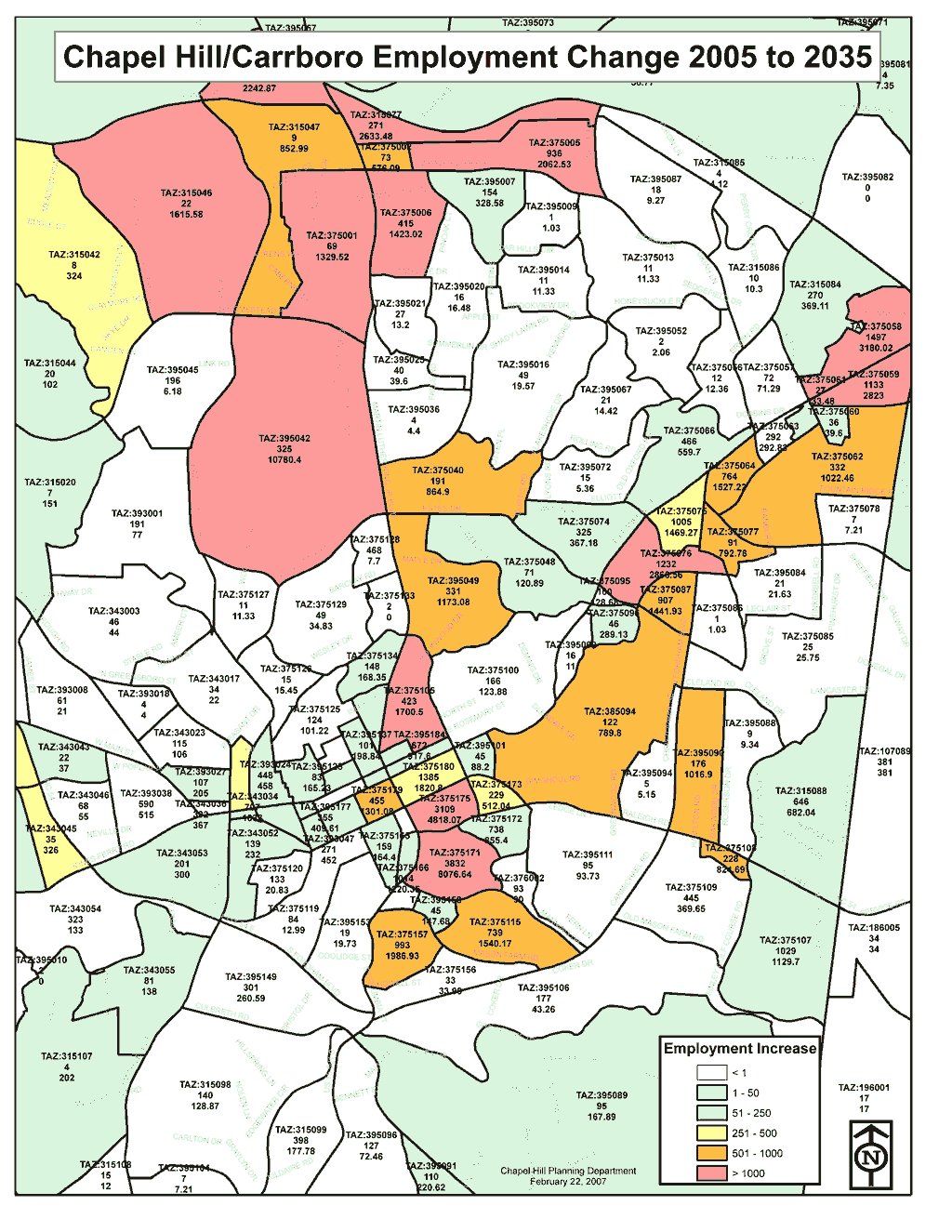
55% increase in population, 130% in employment! 81,297 folks living in Chapel Hill with employment at 81,227 seems to indicate quite a few folks will be coming from out of town. If you review their maps, it also appears that UNC’s Carolina North plays a huge role in that projected employment increase.

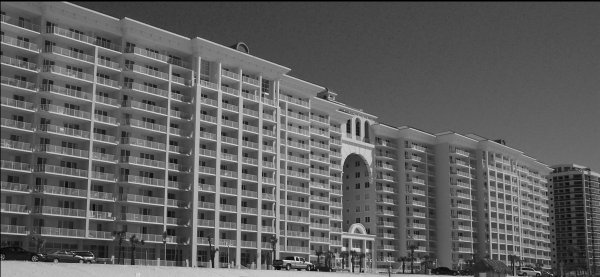
Whatever the reliability of the projections, and coming on the heels of Council’s dreadful and precipitous decision to create a TC-3 zone allowing 120′ tall buildings, I hope our fair Downtown doesn’t end up looking like this:

Giving Kiosk Out, Panhandling Meters In?

Last year, the Downtown Partnership (DPC) commissioned a “giving kiosk” for Downtown. Callie Warner, my neighbor and metalsmith, designed what Liz Parham, Direcor of the DPC, described in this May 16th, 2006 Chapel Hill News column [PDF] as an “economic development tool”:

This past week the Chapel Hill Downtown Partnership carried a concept proposal for a privately funded “Giving Kiosk” to the Town Council for review. The purpose of the Giving Kiosk is to provide downtown visitors with an alternative to giving money to panhandlers by directing their giving to human service agencies that provide beneficial services to those that are in need in the downtown area; to educate the public on the services that are needed and those that are offered; and to educate the public on how social and behavioral issues are hindering the economic vitality of downtown and our community’s growth.

The Chapel Hill Town Council saw this more as an “art project” – introducing a bureaucratic muddle as local curmudgeon Roland Giduz noted last June

This plan is to install a giving kiosk is as an alternative to donating to panhandlers. It will be completely privately financed. It won’t cost taxpayers a penny and should relieve the popularly perceived image of beggars harming the aura of Chapel Hill’s public shopping area.

An anonymous donor has offered to pay the $17,000 construction cost of building and installing this small sidewalk structure downtown. As tried and used elsewhere in similar circumstances, it offers people the option to contribute to designated charities instead of enabling panhandlers. The Chapel Hill Town Council recently considered this proposal, seemed to like it, and commissioned a local artist to submit a design. The resulting design by Callie Warner shows a securely- built rectangular structure, simply roofed and with slots for contributions. It is purely a functional kiosk, both in design and appearance.

As all too often happens when something is caught in the maw of bureaucracy, the kiosk idea has been shoved aside ‘til it can be considered as art, rather than as a functional structure. It now awaits a decision — yet-to-be considered or approved – as to whether it is art instead of a simple structure for its intended purpose. Until then there’ll be no giving kiosk and no donation of it or to it.

In the past, I’ve been critical of some of the harsher aspects of Denver’s Give a Better Way campaign , echoing our local Council champion of homelessness causes Sally Greene’s concerns :

Narayan thus argues, and I agree, that a concern that the presence of panhandlers in a downtown district discourages foot-traffic and therefore undermines the economic health of downtown is not a morally valid reason for the further regulation of panhandling.

On the other hand, the impulse behind the idea of the giving kiosk had much to recommend itself. I think it represented a genuine wish to be helpful, to reach out as a community to help those in need. The trouble is that we don’t have natural connections with panhandlers; they appear to us as strangers, one at a time, seemingly cut off from the community. We really don’t know what a pandhandler will do with the dollar we give him, and we have reason to fear the worst. The initiatives that the Downtown Outreach Work Group is about to embark on are potentially good ones–as long as they include a recognition that in the end we cannot control the lives or wills of others, that not every panhandler is dishonest or deceitful, that there is genuine need staring us in the face. (The Denver program’s home page is pretty harsh: a picture of an upturned palm, inscribed, “Please help. Don’t give.”)

Yes, the impulse to give, to help is commendable and should be nurtured.

That’s why I’m willing to follow Denver’s lead while Council works out the finer points of art, and suggest we trial Denver’s practical approach of using recycled parking meters to collect funds:

The city of Denver has recycled old parking meters to help in the fight against homelessness.

The old parking meters have been placed at various locations in downtown, including Skyline Park.

The idea is to encourage people to put the money into the parking meters instead of giving to panhandlers. Money raised from the meters will go to organizations fighting homelessness.

Mayor John Hickenlooper said the city’s 10 year plan to end homelessness is working.

“Denver’s 10 year plan to end homelessness, what we call Denver’s road home, has really become a national model,” Hickelooper said. “I think we’ve had the greatest success in getting the whole community to buy in, to believe this is something we can tackle as a community.”

Officials unveiled 36 of the homeless meters on Monday.

Denver’s CBS4 Mar. 5th, 2007

The lede of this story – “help[ing] the fight against homelessness” – highlights yet again an unfortunate conflation between panhandling and homelessness.

They’re not equivalent.

I hope that it is a distinction the Chapel Hill Downtown Partnership Work Group on Homeless shares as they move forward.

Not Everyone Walks Across the Crosswalk

Ellen, a small step in the right direction.

From the Liz at the Downtown Partnership

The Chapel Hill Public Works Department with assistance from White Oak Construction will be replacing handicap ramps at prominent downtown crosswalks in the following locations beginning on March 12:

* Franklin Street at Columbia Street
* Mid-block crosswalk at Porthole Alley and
* East Franklin at Henderson Street
* Entrance and exit for Parking Lot 3 in the 400 block of West Franklin Street

Replacement of existing handicap ramps is required for the Town to come into compliance with the Americans with Disabilities Act. The Town plans to begin this project during the University’s spring break in anticipation of reduced traffic volumes downtown. In an effort to further minimize inconvenience to pedestrians, demolition work will be scheduled at night.

Concrete pours will take place before 8:00 a.m. whenever possible; however, a crosswalk undergoing ramp construction will be closed to allow concrete to cure. Consequently, pedestrians may be temporarily redirected to the next available street crossing. As part of the ramp replacement project, it may be necessary for space at the curb to be reserved for construction parking and staging.

During ramp construction at Parking Lot 3, the parking lot will remain accessible to vehicles. Pedestrians will be able to continue along the sidewalk on the south side of West Franklin Street with a minor detour around the work zone.

Weather permitting, the project may be completed before March 23, 2007.

Questions or concerns may be directed to Harold Harris at the Public Works Department, 612-9560.

Not everyone walks across the street, nice to see we’re working the issue.

Next stop Rosemary?

Parking Downtown: Water, Water Everywhere, Nary a Drop to Drink

I served on Chapel Hill’s Downtown Parking Taskforce, which wrapped up its business two weeks ago and which will be presenting its findings formally on Feb. 26th [AGENDA].

I meant to comment more frequently on our work but circumstances and some cautionary notes from staff intervened. It’s an interesting issue – how much of the preliminary work of a committee you serve on do you want to expose?

I wouldn’t want to shut down the free expression of the wildest of ideas. And, though the process was open to the public, like so many of our citizen’s groups rarely covered by the media – hardly attended by those outside the relevant committee.

I certainly commented frequently (and vociferously) on my and others participation in the Horace Williams Citizens’ Committee. I went into the issues discussed within the Technology Board, but didn’t speak to the internal and external tensions that contributed to its dissolution.

Reporting on my next committee (if I’m ever appointed to one after my vocal opposition to Lot #5) will probably be dependent on a number of factors…of which I hope to get some feedback on from my readers…

The Parking Taskforce was pretty effective – and ranks up there with the HWCC for citizen participation.

The meetings usually stayed on point – had some humorous commentaries (including a prominent local comparing University Square to Cabrini Green) – and generated a slew of good ideas.

Here is the cover letter [DOC] and finalized [DOC] report that will be presented on Feb. 26th.

I’ll be adding my support and a little commentary that night – please send me any comments (campaign AT willraymond.org ) or add them to this post.

I appreciate that my central themes of cooperation/collaboration in terms of parking resource allocation made it into the final report.

Unfortunately, the section on using modeling and metrics to manage parking policy – a section I promoted – was excised. Maybe too business-like an approach – but I believe any implementation plan that doesn’t incorporate targets, a methodology to measure progress and actual timely measurements is flawed. We should have time to repair this omission as staff fleshes out the recommendations.

The guidelines I drew up on behalf of the committee were also not included, partially because they were redundant, partially because they didn’t fit into the report structure and partially because we ran out of time to discuss/elaborate/refine on them.

I present them here for completeness.

1. Parking is provided for the public good by the citizens of our community. The public, irrespective of economic, social or other status, will come first. Parking policy, to the greatest extent possible, shall not be discriminatory.

2. Public and private parking is an important and strategic common resource for our Downtown’s success. Parking policy will cultivate private-public management policies to successfully conserve and cultivate this common resource.

3. Fees collected from public parking will not be seen as a revenue generator for the general fund.

4. Fees from public parking are to be utilized for parking and other transit oriented infrastructure support and improvement.

5. While productive public parking policy furthers the social and environmental goals of our town, the primary focus of downtown parking is economic development.

6. Public parking policy will be driven by timely metrics. An “evergreen” process based on measured utilization will be used to adapt to changing conditions.

7. The public’s ability to understand novel parking strategies is not to be underestimated.

8. Parking strategies will be based on “best in class” flexible approaches. Parking requirements fluctuate by time of day and year, location and special activities. “One size, fits all” policy is not appropriate.

9. Failure to abide by commitments to utilize transit in lieu of providing required parking facilities has consequences. [update: this applies to businesses that made commitments to use transit in lieu of building lots]

Additional documents used during our discussions:

I have some additional resources I used that I’ll try to post sometime soon…

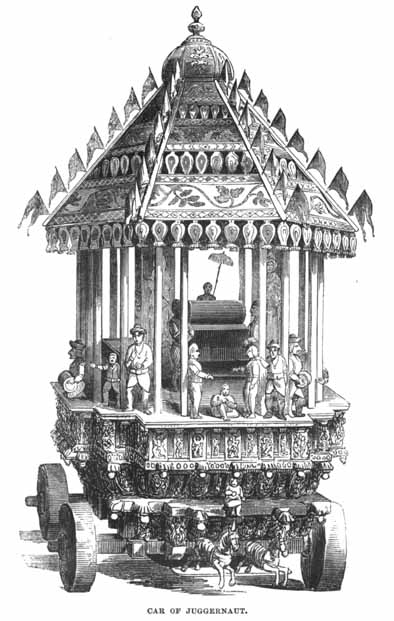
Chapel Hill News: Crushed by Council’s Jagganath

I commented Dec. 4th that the Lot #5 development juggernaut was powered by an all-consuming illogic I fully expected to crush rational opposition.

I wasn’t disappointed [VIDEO].

Echoing that sentiment, today’s Chapel Hill News speaks of a

“proposal…so big and had so much town involvement — Mayor Kevin Foy and council member Bill Strom have been its primary cheerleaders — that it has generated its own momentum.”

Private-public partnerships have and can be quite effective in promoting good policy on many fronts, but, unfortunately, land development is one that’s been subject to quite a bit of abuse.

Whether being consumed and co-opted by the process or willful ignorance, the landscape is rife with examples [thanks Molly, I miss you] of private interests implementing poor public policy – and a perversion of the public good in a rush to implement “sustainable economic development”.

By any objective standard, the ever quickening trajectory of this project has left judicicious public review in the dust:

When they unveiled the new version in November, the scale of the thing had dramatically shrunk — no more Wallace Deck project — although its cost remained just about the same, and the town’s financial stake had dramatically grown, from the original half-mil to $7.25 million. That’s more than a little tweak.

The project has been on a fast track ever since, and apparently will remain on one; the council agreed to move the project speedily through its review process.

Yep, the steamroller was shifted into higher gear last week.

The CHN shares my qualms:

The town is too closely bound to the project for our taste. Either retain the property and use it for truly public purposes — as a park, for example — or sell it to a private developer and be rigorous in reviewing whatever plans that developer proposes.

What can we do?

Contact our Council members (CONTACT) and let them know you don’t want to be steam-rolled by private interest.

Remember, Laurin Easthom and Jim Ward are fighting this proposal – Bill Strom and Kevin Foy are the most vocal boosters with Mark Kleinschmidt facilitating. Sally Greene, Cam Hill, Ed Harrison and Bill Thorpe support this “taking” to various degrees.

I’ll also be reporting on alternative modes of protest as they develop.

Jon Wilner’s Shocking Culture

From the Chapel Hill News ‘blog OrangeChat, a guest post by Jon Wilner, executive director of the Carrboro ArtsCenter:

Culture Shock would be a vehicle for marketing the arts in our community in an attempt to create a destination for what the evening’s facilitator, Bill Flexner, called the “diamond in the rough.” The “diamond” refers to the four towns of Chapel Hill, Carrboro, Hillsborough, and Pittsboro.

The folks over on OP weighed in, with Ruby Sinreich reacting strongly to an N&O report titled “Area wants to cash in on arts assets.”

I had the same initial reaction. Wilner joined the fray with some illuminating commentary.

Chapel Hill has led the way on buying or commissioning art, like the notable $671,000 being spent on an out-of-town artist for Lot #5’s plaza, but we’ve lagged on support for hands-on art (more on that later).

The facilitator’s report on the first CultureShock gathering is available now from their website.

Downtown Development: Feb. 12th Council Debate

[UPDATE:] The video below streams from my site – here’s the Google Video that streams faster.

Here’s the complete “debate” Council held on the Lot #5. Note how quickly the expedited SUP application was approved.


Downtown Development: The LEEDs Trade-Off, AIA 2030 Up Next

Sally Greene suggested trading formal LEEDs certification, which RAM’s VP Casey Cummings said cost $225K, for a required %20 energy reduction, as measured against ASHRAE standards.

Cummings claimed that $14.5K of the $225K involved energy modeling and measurement – the rest involved paper shuffling.

After reviewing the current proposal, it is still not clear that the Town has discussed a baseline with RAM for what a “reduction” entails – let alone a methodology to establish meeting the ASHRAE goals.

That issue aside, if we trade away LEEDs, which as Sally pointed out is an arguably flawed tool (no surprise, local folks pointed that out over a year ago), we still need to establish a firm requirement for a reduced energy footprint and make the commitment to independently establish compliance with that requirement.

In other words, not just take RAM’s word (“trust but verify”).

So, if we spend the $14.5K to verify adherence to LEEDs principles without doing the LEEDs paper-shuffle – well, that seems reasonable in isolation.

But, then again, why are we trading away anything? We’ve already reduced the public space, we’ve upped our public investment 15-fold, we’ve assumed a significant liability for less and less public utility. Our compliant negotiating team let RAM chip, chip, chip away the value.

And why just %20? If RAM pushed for %50, they’d qualify for a hefty tax break – $1.80 per square foot. Heck, they would get $0.60 per square for hitting %17.

Why are we begging them to do the “right thing”?

Luckily, Council will have an opportunity to attenuate their environmental misstep when Tom and company submit the following challenge to Council calling on all local building to meet the much more stringent AIA 2030 goals – a suggestion, at least for Lot #5, that was dismissed almost without comment.

Resolution to the Town of Chapel Hill to Adopt the AIA 2030 Challenge:

Combating Climate Change through Building Design

Whereas buildings in the United States are responsible for 48% of primary energy consumption and 46% of greenhouse gases; and

Whereas current trends indicate that, unless immediately addressed, the amount of energy consumed by buildings will continue to escalate; and

Whereas 7% to 8% of energy consumed in the United States (150 Btus/gallon water) is associated with the treatment and transport of municipal water; and

Whereas to restrict global warming to less than 2 degrees C above pre-industrial era levels will require atmospheric carbon dioxide levels, now at 380 ppm, to be held below 450 ppm; and

Whereas the decisions made today in designing buildings will directly impact the amount of energy consumed by those buildings for decades to come; and

Whereas technologies and skills exist today that enable architects to design buildings to consume a fraction of the energy that is typical of current construction; and

Whereas the American Institute of Architects has adopted the targets of “The 2030 Challenge”, establishing the national goal of immediately reducing “site” fossil fuel consumption and carbon dioxide emissions in new buildings and major renovations by 50%, and continually improving energy performance so buildings constructed in 2030 will be carbon neutral; and

Whereas the Town of Chapel Hill has agreed with the University of North Carolina at Chapel Hill to jointly participate in a carbon reduction program;

Therefore, be it resolved that the Orange County Democratic Party calls upon the Town of Chapel Hill to recognize the imperative of immediately addressing climate change through the buildings built within the Town by taking all necessary steps to insure that all new buildings, major renovations and additions be required to consume 50% less fossil fuel energy than is typically consumed.

Further, in order to mitigate the impacts of climate change associated with the operation of buildings and to reduce greenhouse gas levels to those experienced in 1990, we additionally call upon the Town of Chapel Hill to require the improvement in the energy and water efficiency of our building designs at the following rates until, in 2030, our buildings consume only site-generated and/or purchased renewable energy.

Years % reduction in non-renewable energy
2007 – 2010 50%
2010 – 2015 60%
2015 – 2020 70%
2020 – 2025 80%
2025 – 2030 90%
2030+ 100%

For a Council that appears to be incapable of managing its own environmental concerns, the AIA 2030 challenge might be too much of a stretch.

I hope that I’m wrong and that they’ll rise to the challenge.

Downtown Development: Feb. 12th Citizen Comment

Endorsing the flawed deal:


Anita Badrock Chapel Hill/Carrboro Chamber of Commerce


Criticizing the misbegotten proposal:


Andrea Rohrbacher former Council candidate, Chair of the Downtown Partnership, representing the Sierra Club.


Francis Henry downtown business owner, longtime resident of Chapel Hill.


Jean Brown Chapel Hill/Carrboro school advocate


Tom Henkel Long time resident, brilliant alternative energy consultant.


Mike Collins leader of Neighborhoods for Responsible Growth


Joyce Brown Environmental activist, former Council member.


WillR of Citizen Will.

Godzilla vs. Bambi::RAM Development and Chapel Hill

If I worked for RAM Development, I’d be dancing quite a jig this evening.

Not only have they negotiated the sweetest of deals – their own publicly underwritten Downtown tower of wealth – they’ve gotten the friendliest of non-reviews by the majority of Council.

Maybe folks will like “rah rah” growth RAM Development style. If so, they’ll be pleased to see that they’re geared up for Phase III:

CHAPEL HILL – Ram Development Co. is moving forward with two projects at the intersection of Martin Luther King Jr. Boulevard and Weaver Dairy Road.

On Feb. 21, Ram will go before the town’s Community Design Commission with plans totaling about 130,000 square feet on either side of MLK Boulevard.

The first project, called MLK at Westminster, proposes 48 condos, two banks and a 22,000-square-foot office and retail building on the west side of MLK at the edge of the Northwoods neighborhood.

The second project would include a 16,000-square-foot Walgreen’s drug store and a 22,000-square-foot office and retail building on the east side of MLK near Timberlyne Shopping Center.

N&O Feb. 9th, 2007

Is it really “MLK at Westminster”? That surely sounds, ummm, bland? Safe? White?

What happened to Phase II?

That’s Hillsborough 425 – the 335 pricey condos replacing the existing 111 affordable apartments.

So, for those keeping score, RAM Development now has 4 on-going projects before the current Council.