Category Archives: ChapelHill

CAMPO’s Racetrack 5 Miles Long

The Durham-Chapel Hill Carrboro Metropolitan Planning Commission (DCHC-MPO) has formed a special advisory task force in conjunction with Capital Area Metropolitan Planning Organization (CAMPO) “to recommend a plan for major transit investments in the Triangle area.”

Their charter?

This commission will play a critically important role in the development of a unified vision for future transit investments in the Triangle area. The recommendations that the commission develops will be forwarded to the Transportation Advisory Committees (TACs) of both the DCHC MPO and the CAMPO for use in the formulation of their Long Range Transportation Plans.

Thanks to Patrick McDonough for the heads up.

Part of their agenda is to reevaluate the Triangle Transit Association’s (TTA) Regional Rail plan.

Though not averse to appropriate rail deployments, I’d like to see our community support the cheaper, more flexible Bus Rapid Transit (BRT) approach before plunging back into a rail-centric system.

Regional transit policy needs an “evergreen” process to address our community’s rapidly changing needs.

The commission membership has some real local talent, including former Council member Gerry Cohen (of the excellent NC Bill Drafting ‘blog) and Chapel Hill Planning Board member George Cianciolo (GeorgeC on OP).

Gerry kindly fills out the list of appointees:

Here is the membership list of the new 4 county transit planning committee, CAMPO are the Wake/Johnston appointments, DCHC-MPO are the Durham/Orange appointments. Bio sketches are from the staff memoranda.

CAMPO:

Bill Cavanaugh, (Co-Chair)
Former chairman, chief executive officer, and president, Progress Energy Chairman of the World Association of Nuclear Operators (WANO) Member of the National Academy of Engineering Board of visitors at the University Of North Carolina Kenan Flagler School Of Business Advisory Board of Tulane’s School of Engineering Board of Directors for Research Triangle Foundation

Smedes York, (Co-Vice Chair)
Mayor, City of Raleigh, 1979-1983 Raleigh City Councilman, District E, 1977 to 1979. President of York Properties, Inc. Board Chairman York Simpson Underwood and McDonald-York Past chairman of the North Carolina Citizens for Business and Industry Past chairman N.C. State University Board of Trustees Board of Directors of the Research Triangle Foundation YMCA of the Triangle North Carolina Amateur Sports Trustee of the Urban Land Institute Founding Co-Chair of Regional Transportation Alliance

Tom Bradshaw
Mayor, City of Raleigh 1971-1973 Secretary of N.C. Dept. of Transportation, 1976 – 1979 Member – Blue Ribbon Commission on the Future of Wake County Managing Director, Public Finance Dept., CitiGroup Global Markets, Inc.

Daniel Coleman
Attorney, Liveable Streets Partnership, Raleigh-Wake Citizens Association

Trish Dowty
Vice President of the Corporate Services Division, SAS Property, Procurement, and Logistics Management, CTI Data and Denelcor, Inc. Board of Directors, Cary Chamber of Commerce

Greg Flynn
NC Dept of Public Instruction School Planning NC Division of Forest Resources Architect

Mike Hendren
Wake Forest Chamber of Commerce.Board of Directors, Chair of the Government Affairs Committee

Jodi LaFreniere
Morrisville Chamber of Commerce President Member – Business Alliance Leadership Team Member Regional Transportation Alliance

Jennifer Lewis
Graduate Research Asst., Department of City and Regional Planning, UNC-CH Transportation Planning, Town of Chapel Hill Transportation Planner, The Louis Berger Group

Rusine Mitchell-Sinclair
Vice President at Large – North Carolina Electronics and Information Technologies Association (NCEITA) Regional Transportation Alliance – Vice chair of Regional Leadership Senior State Executive, VP Strategy & Implementation, Global IT Delivery – IBM

Mack Paul
Past President – Triangle Tomorrow Chief of Staff and legal counsel to Lieutenant Governor Dennis Wicker Associate General Counsel for Blue Cross and Blue Shield of North Carolina

Warren Sawicki
Fuquay-Varina – Chamber of Commerce Retired Manufacturing Executive

Frank Timberlake
R.F. Timberlake and Company
President Carolinas/Virginia Chapter NAMA (National Agri-Marketing Association)

Ed Willingham
2006-07 chair of the Regional Transportation Alliance Executive Vice President for First Citizens Bank’s Triangle Region

Frank Price
President of F. L. Price & Associates Chair – Clayton Planning Board

Gerry Cohen
Director of Legislative Drafting, NC General Assembly Former Member-Chapel Hill Town Council Former Member-Chapel Hill Transportation Board

Tim Reed
Conservation Co-Chair of the Capital Group Sierra Club

Ex Officio Members:
Joe Bryan
Chair, Capital Area MPO TAC Commissioner, Wake County

Charles Meeker
Vice Chair, Capital Area MPO TAC Mayor, City of Raleigh

John Brantley
Director, RDU International Airport Commission member – Blue Ribbon Commission on the Future of Wake County

Rick Weddle
President and CEO of the Research Triangle Foundation Vice Chair for Governmental Affairs – Regional Transportation Alliance Commission member – Blue Ribbon Commission on the Future of Wake County

=========================

DCHC_MPO appointees (Durham/Orange)

Cassandra Atkinson, Ph.D.
Adjunct Associate Professor, Department of Public Administration Director of Community Research and Technical Assistance Initiative Project Director, Transportation Management Bachelor’s Degree Program North Carolina Central University (Chancellor Ammons’ nominee) She has written several grants with the NC Department of Transportation and conducted research on transportation management needs.

George Cianciolo, Ph.D. (Co-Chair)
Member, Chapel Hill Planning Board Member, Chapel Hill Community Design Commission Former chair and member, Chapel Hill Transportation Board (six years) Former member, University of North Carolina Leadership Advisory Committee Associate Professor of Pathology, Duke University Medical Center

Carolyn Elfland
Associate Vice Chancellor for Campus Services University of North Carolina at Chapel Hill (Chancellor Moeser’s nominee) The University’s transportation planning, transportation demand management, and transit functions are within her area of responsibility. Member of the partnership committee that guides the Chapel Hill Transit system Represented the University on the 15-501 and 54 corridor studies

Robert (”Bo”) Glenn
Chair, Durham Open Space and Trails Commission Member, Durham Bicycle and Pedestrian Commission Member, Tarwheels Bicycle Club Served on the Durham Housing Authority for over 20 years Senior Budget Analyst, Office of the Governor, State Budget and Management Former Congressional Fellow for Rep. Earl Blumenauer (Portland, Oregon) Master’s in Regional Planning and Public Administration

Chris Harder
Vice chair, Durham Area Transit Authority (DATA) Board

Cal Horton
Former Town Manager (16 years, until 2006), Town of Chapel Hill As Manager, he has been a regional leader on transportation issues.

Sandy Ogburn
Member of the Board of Directors of several organizations in the Durham community, including the Durham Community Land Trust and the West End Community Center Former member of the Durham City Council, the Durham-Chapel Hill-Carrboro MPO, and the Triangle Transit Authority Board of Trustees

Bernadette Pelissier, Ph.D.
Chair, Orange Chatham Group of the Sierra Club Member, Orange County Planning Board Member, Orange County Commission for the Environment Former member, University of North Carolina Leadership Advisory Committee Ph.D. in Sociology. Recently retired from the Federal government

Roger Perry
Chair, Triangle Tomorrow President, East West Partners (member of the Chapel Hill-Carrboro Chamber of Commerce and the Regional Transportation Alliance) Member, Board of Trustees, University of North Carolina at Chapel Hill Served on the Board of Visitors of UNC and Executive Committee of the Center for Real Estate at UNC’s Kenan Flagler School Past chair, Triangle United Way

Mike Shiflett
Member, Durham Inter-Neighborhood Council, Northgate Park Member, Board of Directors for the Coordinating Council for Senior Citizens President and CEO, American Labor (member of the Durham Chamber of Commerce and the Regional Transportation Alliance) Member, Durham Chamber of Commerce, Transportation Committee Served on US 40 HOV task force, Durham Comprehensive Plan, Travel Demand Ordinance Task Force Former member, Orange County’s Economic Development District Transportation Task Force

Holly Reid
President, Board of Trustees, Eno River Association Co-Founder, Walkable Hillsborough Coalition

Sam Nichols Jr.
Senior Vice President, First Citizens Bank Durham Chamber of Commerce, Transportation and Economic Development Committees

Ex-Officio Members:

TAC Chair, Alice Gordon (Orange County Commissioner)
TAC Vice Chair, Becky Heron (Durham Coounty Commissioner)

TTA has entered the ‘net realm in soliciting community feedback with their online Design Game.

You can vote your wallet on transit priorities there through March 9th, 2007. The choices are a bit slim but at least you can lend your weight towards options you endorse.
Not Everyone Walks Across the Crosswalk

Ellen, a small step in the right direction.

From the Liz at the Downtown Partnership

The Chapel Hill Public Works Department with assistance from White Oak Construction will be replacing handicap ramps at prominent downtown crosswalks in the following locations beginning on March 12:

* Franklin Street at Columbia Street
* Mid-block crosswalk at Porthole Alley and
* East Franklin at Henderson Street
* Entrance and exit for Parking Lot 3 in the 400 block of West Franklin Street

Replacement of existing handicap ramps is required for the Town to come into compliance with the Americans with Disabilities Act. The Town plans to begin this project during the University’s spring break in anticipation of reduced traffic volumes downtown. In an effort to further minimize inconvenience to pedestrians, demolition work will be scheduled at night.

Concrete pours will take place before 8:00 a.m. whenever possible; however, a crosswalk undergoing ramp construction will be closed to allow concrete to cure. Consequently, pedestrians may be temporarily redirected to the next available street crossing. As part of the ramp replacement project, it may be necessary for space at the curb to be reserved for construction parking and staging.

During ramp construction at Parking Lot 3, the parking lot will remain accessible to vehicles. Pedestrians will be able to continue along the sidewalk on the south side of West Franklin Street with a minor detour around the work zone.

Weather permitting, the project may be completed before March 23, 2007.

Questions or concerns may be directed to Harold Harris at the Public Works Department, 612-9560.

Not everyone walks across the street, nice to see we’re working the issue.

Next stop Rosemary?

Community Networking: Profiting from Poor Leadership Clearwire Gains a Toe-hold

Profiting from Council’s continued inability to craft effective technology policy, Clearwire, a wireless Internet service provider utilizing proprietary spectrum, has gained a toe-hold in our community.

These days, it’s hard to imagine getting through high school without the Internet.

However, there are at least 100 students at East Chapel Hill High School whose families cannot afford the service.

This number is a big concern for Ginny Guilfoile, East Chapel Hill’s Parent Teacher Student Association president who started a program to provide loaner computers and Internet access for students in need.

“I thought, how would it be if my kid didn’t have a computer,” Guilfoile said. “I knew there were kids that could not keep up with the other kids at East without the Internet.”

The district’s Information Technology Division was able to form a partnership with Clearwire, a high-speed wireless Internet provider.

Ray Reitz, the district’s chief technology officer, explained that by using Clearwire, the need for costly land-line phones or cable is eliminated.

“The cost of Internet access has been the main obstacle. The Clearwire solution is a completely wireless solution,” Reitz said.

Daily Tar Heel, Feb. 28th, 2007

Long time readers know how I’ve promoted the development of a community-owned network to stimulate economic development, bridge the digital divide and increase Town’s operational efficiency.

Councilmember Laurin Easthom has been the only elective leader to-date promoting the cost effective and tactical deployment of this “must have” infrastructure.

“Must have”? Yes, to compete effectively in the global marketplace we need to invest a modest amount in technological infrastructure.

Rider said she has received very positive feedback from the 42 students to whom the program has provided Internet access so far.

“One student told me the quality of her work improved because she had time in between going to school and working on assignments,” Rider said. “Basically they all talk about the same thing – how it was very hard to do their work and how much easier it is right now.”

Guilfoile said that although the program has been successful this year, the PTSA might not be able to sustain the funds needed to continue it unless they find a long-term source for funding.

Only 42 students now out of 100 alone at East covered by the $15,000 in grant money.

What of all the other students and residents within Town that are cut-off from the new Town Commons?

Free access to both information and information infrastructure is critical for our community’s success.

Recently, local activist Ellen Perry pointed out in a thread on OrangePolitics the problem the homeless have when cut-off from communication:

has any one ever thought about helping these folks get social security and a post office box so they could start to help themselves . if people dont have anywhere to get there mail its hard to start to get a check or a medicaid card or food stamps or apply for any of the stuff people have when they have a home.

As last week’s Independent headlined (Bridging the divide
Techies across the Triangle are finding ways to connect people around the world
), more and more services are being directed and delivered via the ‘net.

For a community that prides itself on social justice and intellectual prowess, the continuing failure to bridge the gap is inexcusable.

News Wars

No, I’m not talking about a face-off between the N&O and the Herald Sun.

If you get PBS HD 4.2, Frontline is airing the episode, “What’s Happening to the News”, of their series News War

Bergman traces the recent history of American journalism, from the Nixon administration’s attacks on the media and the post-Watergate popularity of the press to new obstacles presented by the war on terror and changing economics in the media business and the Internet. The topic has special resonance for Bergman, whose career as a journalist for FRONTLINE, The New York Times, ABC News and 60 Minutes has included reporting on the issues that are critical to the current controversies. “There has been a perfect storm brewing in the world of news,” says Bergman. “Not since the Nixon administration has there been this level of hostility leveled at news organizations. … [But] unlike the confrontations of 35 or more years ago, today’s news war sees the very economic foundations of the business shifting.”

Don’t get HD? Frontline is streaming the show here.

Tonight’s episode

examines the economic pressures the news industry faces because of aging audiences and the Internet. Included: comments from “Daily Show” head writer David Javerbaum; Ted Koppel; former L.A. Times managing editor Dean Baquet, who was fired after a dispute about staffing cuts; “60 Minutes” executive producer Jeff Fager; Google CEO Eric Schmidt; Daily Kos’ Markos Moulitsas; and former L.A. Times editor John Carroll.

Ever since the Chapel Hill News was McClatcheyed and the Herald Sun was Paxtoned the overall quality of Chapel Hill reportage, in my humble opinion, has slipped.

It is NOT the fault of the Chapel Hill News staff but, I believe, the framework they’re working within. That’s why I welcome their latest experiment, Orange Chat, that allows them more direct interaction, fuller explication and timelier reportage than their print version. Must be frustrating to have to do an end run to deliver content to the community.

Beyond that, the Chapel Hill News is having a nice upswing with the awarding of six news awards by the NC Press Association in the 2006 NC statewide competition.

Staff writer Jesse DeConto won a first-place award in the news enterprise reporting category for “Down on the Corner,” a story about the immigrants who gather at a corner in Carrboro every morning looking for day labor jobs.

“Excellent ‘enterprise’ to recognize this story and cover it so well,” the judge wrote. “It has a human side as well as the background and supporting data that shows this to be an issue of importance. Well done!”

Editor Mark Schultz earned a first-place award for headline writing.

CHN, Feb. 26th

McClatchey needs to unleash these folks and let them run their own shop.

By the way, though I’m an occasional columnist for the CHN, I’m speaking from no internal knowledge.

Proprietary Public Policy: Chapel Hill Streaming Video Goes Live?

In reviewing this evening’s notes on increasing the Town’s election contribution limits ($200 to $250) and lowering the standards of disclosure ($25 instead of $20), I noticed that Internet video is now available.

The Town’s proprietary Windows Media-based solution from Granicus was opposed by a number of members of the since dissolved Town Technology Advisory Board.

Here’s an overview of their system.

Sure, the Macromedia (now Adobe) Flash player used with the content I’ve posted on youTube and Google Video is proprietary, but, unlike the Granicus system, both give you a download option.


UPDATE:
The media player was not honoring the “no autoplay” directive. For the sanity of my readers, I’ve put in this direct link.
DIRECT LINK

I hope this issue is resolved before final deployment.

BTW, I think the current $200/$20 thresholds should stand until contested. Further, rather than fiddling with the limits we should be pushing for public financing – which, luckily, is on tonight’s agenda [#13]. The Council is asking the State permission to trial public financing.

Of course, asking is a lot easier than doing. Hopefully this won’t die on the vine after election 2007.

Parking Downtown: Water, Water Everywhere, Nary a Drop to Drink

I served on Chapel Hill’s Downtown Parking Taskforce, which wrapped up its business two weeks ago and which will be presenting its findings formally on Feb. 26th [AGENDA].

I meant to comment more frequently on our work but circumstances and some cautionary notes from staff intervened. It’s an interesting issue – how much of the preliminary work of a committee you serve on do you want to expose?

I wouldn’t want to shut down the free expression of the wildest of ideas. And, though the process was open to the public, like so many of our citizen’s groups rarely covered by the media – hardly attended by those outside the relevant committee.

I certainly commented frequently (and vociferously) on my and others participation in the Horace Williams Citizens’ Committee. I went into the issues discussed within the Technology Board, but didn’t speak to the internal and external tensions that contributed to its dissolution.

Reporting on my next committee (if I’m ever appointed to one after my vocal opposition to Lot #5) will probably be dependent on a number of factors…of which I hope to get some feedback on from my readers…

The Parking Taskforce was pretty effective – and ranks up there with the HWCC for citizen participation.

The meetings usually stayed on point – had some humorous commentaries (including a prominent local comparing University Square to Cabrini Green) – and generated a slew of good ideas.

Here is the cover letter [DOC] and finalized [DOC] report that will be presented on Feb. 26th.

I’ll be adding my support and a little commentary that night – please send me any comments (campaign AT willraymond.org ) or add them to this post.

I appreciate that my central themes of cooperation/collaboration in terms of parking resource allocation made it into the final report.

Unfortunately, the section on using modeling and metrics to manage parking policy – a section I promoted – was excised. Maybe too business-like an approach – but I believe any implementation plan that doesn’t incorporate targets, a methodology to measure progress and actual timely measurements is flawed. We should have time to repair this omission as staff fleshes out the recommendations.

The guidelines I drew up on behalf of the committee were also not included, partially because they were redundant, partially because they didn’t fit into the report structure and partially because we ran out of time to discuss/elaborate/refine on them.

I present them here for completeness.

1. Parking is provided for the public good by the citizens of our community. The public, irrespective of economic, social or other status, will come first. Parking policy, to the greatest extent possible, shall not be discriminatory.

2. Public and private parking is an important and strategic common resource for our Downtown’s success. Parking policy will cultivate private-public management policies to successfully conserve and cultivate this common resource.

3. Fees collected from public parking will not be seen as a revenue generator for the general fund.

4. Fees from public parking are to be utilized for parking and other transit oriented infrastructure support and improvement.

5. While productive public parking policy furthers the social and environmental goals of our town, the primary focus of downtown parking is economic development.

6. Public parking policy will be driven by timely metrics. An “evergreen” process based on measured utilization will be used to adapt to changing conditions.

7. The public’s ability to understand novel parking strategies is not to be underestimated.

8. Parking strategies will be based on “best in class” flexible approaches. Parking requirements fluctuate by time of day and year, location and special activities. “One size, fits all” policy is not appropriate.

9. Failure to abide by commitments to utilize transit in lieu of providing required parking facilities has consequences. [update: this applies to businesses that made commitments to use transit in lieu of building lots]

Additional documents used during our discussions:

I have some additional resources I used that I’ll try to post sometime soon…

University Station: “Absurd” and “Absolutely Ridiculous”

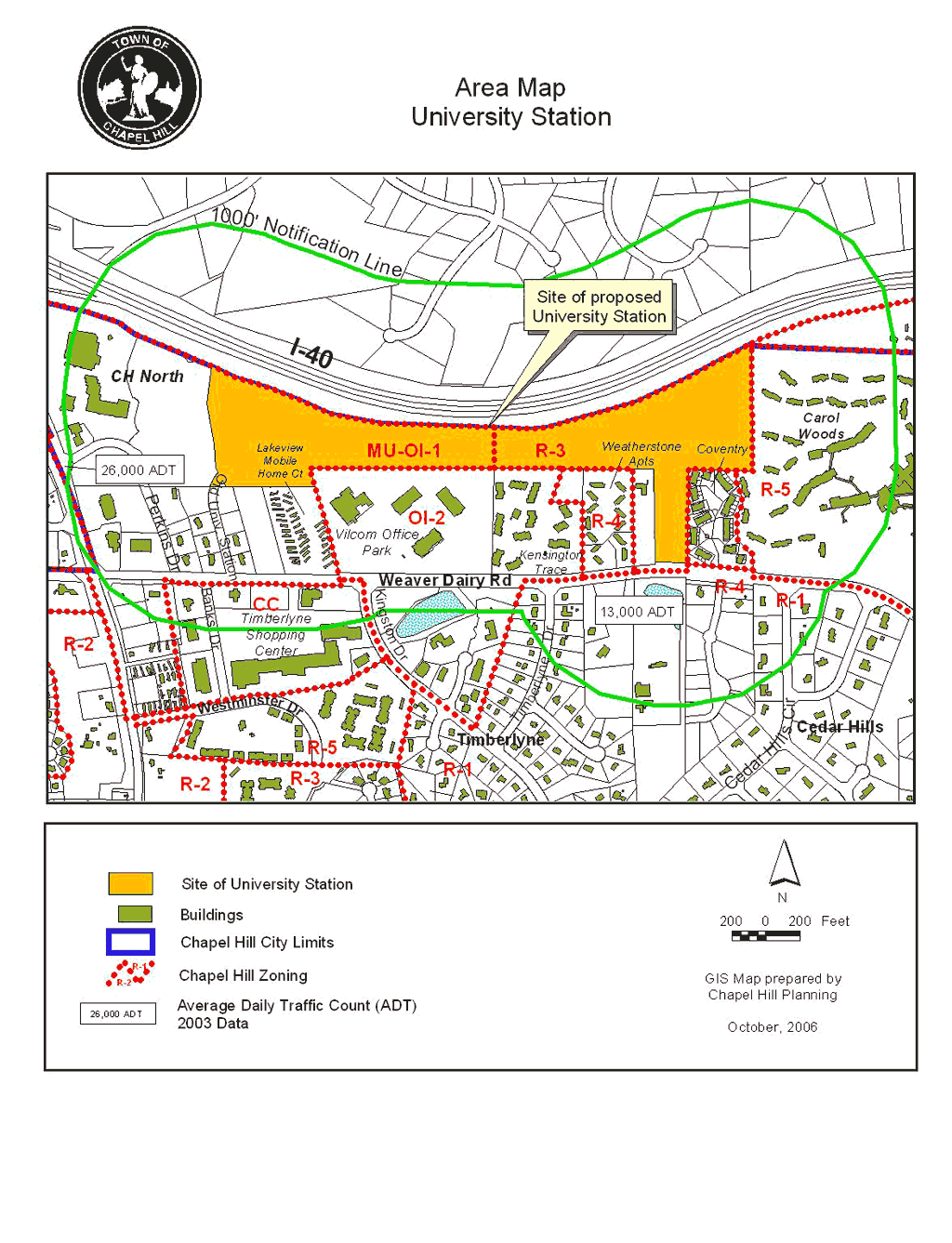
The University Station project – a development hugging the South-side of I-40 on Chapel Hill’s North perimeter – is up for review tonight (Feb. 19th).

Local resident John Doyle called Townhall to comment that the proposal was “absurd”, “absolutely ridiculous” and emphasizes that he’ll “make sure” any Council members approving the plan will not serve again.

John, 2007 is an election year 😉

Other citizens chimed in [PDF] on noise, traffic and other relevant issues.

Concern is growing about imprudent growth in our NW corridor – folks are starting to organize.

I’ll be interested to see if the “rah rah” growth wing of Council shows a bit more sensitivity – especially considering the increasing role their buddies at RAM Development are playing to the NW – this evening.

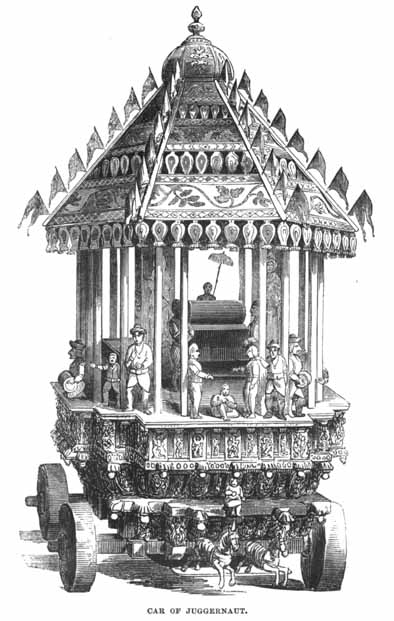
Chapel Hill News: Crushed by Council’s Jagganath

I commented Dec. 4th that the Lot #5 development juggernaut was powered by an all-consuming illogic I fully expected to crush rational opposition.

I wasn’t disappointed [VIDEO].

Echoing that sentiment, today’s Chapel Hill News speaks of a

“proposal…so big and had so much town involvement — Mayor Kevin Foy and council member Bill Strom have been its primary cheerleaders — that it has generated its own momentum.”

Private-public partnerships have and can be quite effective in promoting good policy on many fronts, but, unfortunately, land development is one that’s been subject to quite a bit of abuse.

Whether being consumed and co-opted by the process or willful ignorance, the landscape is rife with examples [thanks Molly, I miss you] of private interests implementing poor public policy – and a perversion of the public good in a rush to implement “sustainable economic development”.

By any objective standard, the ever quickening trajectory of this project has left judicicious public review in the dust:

When they unveiled the new version in November, the scale of the thing had dramatically shrunk — no more Wallace Deck project — although its cost remained just about the same, and the town’s financial stake had dramatically grown, from the original half-mil to $7.25 million. That’s more than a little tweak.

The project has been on a fast track ever since, and apparently will remain on one; the council agreed to move the project speedily through its review process.

Yep, the steamroller was shifted into higher gear last week.

The CHN shares my qualms:

The town is too closely bound to the project for our taste. Either retain the property and use it for truly public purposes — as a park, for example — or sell it to a private developer and be rigorous in reviewing whatever plans that developer proposes.

What can we do?

Contact our Council members (CONTACT) and let them know you don’t want to be steam-rolled by private interest.

Remember, Laurin Easthom and Jim Ward are fighting this proposal – Bill Strom and Kevin Foy are the most vocal boosters with Mark Kleinschmidt facilitating. Sally Greene, Cam Hill, Ed Harrison and Bill Thorpe support this “taking” to various degrees.

I’ll also be reporting on alternative modes of protest as they develop.

Beverly McIver’s Journey

[UPDATE:] N&O coverage, tip from enthusiastic fan Paul Jones’ post.

Used with the kind permission of
Beverly McIver

Renee

Artist Beverly McIver will be speaking tomorrow (Feb. 18th) from 2-3pm at Tyndall Galleries in Chapel Hill’s University Mall [MAP].

Beverly has documented her personal trajectory through autobiographical portraiture using an authentic and stylized approach – an approach and style I’ve watched develop for nearly two decades.

Local folks, like Paul Jones, have also been following this Greensboro artist’s NC successes.

Tomorrow is an excellent opportunity to hear Beverly’s reflections on life, art and “her role in a society that historically has marginalized minorities and women” (to requote Preview: The Magazine of the North Carolina Museum of Art, March/April 2006).

Further works.

Jon Wilner’s Shocking Culture

From the Chapel Hill News ‘blog OrangeChat, a guest post by Jon Wilner, executive director of the Carrboro ArtsCenter:

Culture Shock would be a vehicle for marketing the arts in our community in an attempt to create a destination for what the evening’s facilitator, Bill Flexner, called the “diamond in the rough.” The “diamond” refers to the four towns of Chapel Hill, Carrboro, Hillsborough, and Pittsboro.

The folks over on OP weighed in, with Ruby Sinreich reacting strongly to an N&O report titled “Area wants to cash in on arts assets.”

I had the same initial reaction. Wilner joined the fray with some illuminating commentary.

Chapel Hill has led the way on buying or commissioning art, like the notable $671,000 being spent on an out-of-town artist for Lot #5’s plaza, but we’ve lagged on support for hands-on art (more on that later).

The facilitator’s report on the first CultureShock gathering is available now from their website.

2nd Annual PROM Dress Drive

Via Terri Buckner (LocalEcology) at SqueezeThePulp

PROM Night is coming up and we have had requests for help in getting prom dresses for some students who can not afford to buy a dress. We are asking anyone who has a dress or dresses that are collecting dust in the closet to donate them to our Second Annual Prom Dress Drive.

We hope you all will take a look in your closet and pick out a few of those old brides’ maid dresses or prom gowns as well as shoes and accessories and drop them off at Orange High School by March 2, 2007.

Dresses, shoes and accessories can be given to Laura Shenkman in The Adolescents In Need Office or April Johnson, school social worker. We can also come by your school and pick them up if needed. This is a great opportunity to spring clean and helps a few young women have a wonderful prom experience.

Our Prom Dress shop will be open to any student in need with a referral from a teacher, counselor or an administrator. Shop opens March 6th at Orange High School. Please send all referred students names ASAP.

April Johnson, 732-5240 ext: 2002
Laura Shenkman 732-6133 EXT: 20067
Avis Barnes, 245-4000 ext: 21067

What a nice idea….

Trashing the Rogers Road Community, Again

[UPDATE: Response to davepr from Orange County BOCC member Moses Carey.

The Rogers Road (MAP) community has long suffered from promises unkept.


[UPDATE:] Embedded video:


At Feb. 12th’s Chapel Hill Town Council meeting
Sharon Cook and Jeanie Stroud defend their Rogers Road community.

As you might remember from my recent posts, the area is coming under closer scrutiny by Chapel Hill, which stands poised to annex the area.

Whether through deliberate environmental racism or just plain old callousness, the Rogers Road community, backing up to the Orange County landfill, has had to deal with the consequences of our garbage woes for decades while original promises, such as keeping the landfill north of Eubanks, fell to expediency in the mid-’90s.

Instead of treating this traditionally black community with the due courtesy and respect they deserve – deserve doubly for both dealing with the noxious detritus of our modern life and the many unfulfilled obligations our leaders made on our behalf – our community continues to give short shrift to our northern neighbors.

In December I attended the kickoff meeting for the Rogers Road Small Area Plan. That meeting cemented my concerns that, once again, the Rogers Road community would be getting the short end of the stick.

Why? Money, of course. From the Rogers Road corridor east towards Martin Luther King (Airport) Road is going to be prime development land. If Chapel Hill annexes the neighborhood before the landfill closes the tax valuations will race ahead of the land resale value. A developer, though, could pick up tracts for a song – sit on them waiting for the landfill to close up shop – and turn a pretty penny.

To avoid that our Council needs to promise to coordinate the annexation time table with the closing of the landfill. Let’s be fair.

Shorter term, the Rogers Road community faces the prospect of a garbage transfer station being sited on Eubanks.

Now, in many respects I’m proud of the strides our community has made in dealing responsibly with garbage.


Strategic operations by the Orange County Solid Waste Management Department, along with our community’s strong recycling efforts, have extended the life of the existing landfill while redirecting various waste streams into beneficial uses – mulching, composting, recycling, etc.

With the anticipated 2010 closure, transferring waste will become a necessity. Shipping it in or out of county entails another set of environmental consequences. Our community must take a leadership role in responsibly dealing with the 25,000 tons – 29% of the total waste – formerly going into the landfill.

Maybe the most effective site for the transfer center is the existing Eubanks road location. And maybe you can make it look “Greek or Roman temple”.

But if the Rogers Road community says “we’ve had enough” then we’re obligated to find an acceptable solution.

Downtown Development: Feb. 12th Council Debate

[UPDATE:] The video below streams from my site – here’s the Google Video that streams faster.

Here’s the complete “debate” Council held on the Lot #5. Note how quickly the expedited SUP application was approved.


Downtown Development: The LEEDs Trade-Off, AIA 2030 Up Next

Sally Greene suggested trading formal LEEDs certification, which RAM’s VP Casey Cummings said cost $225K, for a required %20 energy reduction, as measured against ASHRAE standards.

Cummings claimed that $14.5K of the $225K involved energy modeling and measurement – the rest involved paper shuffling.

After reviewing the current proposal, it is still not clear that the Town has discussed a baseline with RAM for what a “reduction” entails – let alone a methodology to establish meeting the ASHRAE goals.

That issue aside, if we trade away LEEDs, which as Sally pointed out is an arguably flawed tool (no surprise, local folks pointed that out over a year ago), we still need to establish a firm requirement for a reduced energy footprint and make the commitment to independently establish compliance with that requirement.

In other words, not just take RAM’s word (“trust but verify”).

So, if we spend the $14.5K to verify adherence to LEEDs principles without doing the LEEDs paper-shuffle – well, that seems reasonable in isolation.

But, then again, why are we trading away anything? We’ve already reduced the public space, we’ve upped our public investment 15-fold, we’ve assumed a significant liability for less and less public utility. Our compliant negotiating team let RAM chip, chip, chip away the value.

And why just %20? If RAM pushed for %50, they’d qualify for a hefty tax break – $1.80 per square foot. Heck, they would get $0.60 per square for hitting %17.

Why are we begging them to do the “right thing”?

Luckily, Council will have an opportunity to attenuate their environmental misstep when Tom and company submit the following challenge to Council calling on all local building to meet the much more stringent AIA 2030 goals – a suggestion, at least for Lot #5, that was dismissed almost without comment.

Resolution to the Town of Chapel Hill to Adopt the AIA 2030 Challenge:

Combating Climate Change through Building Design

Whereas buildings in the United States are responsible for 48% of primary energy consumption and 46% of greenhouse gases; and

Whereas current trends indicate that, unless immediately addressed, the amount of energy consumed by buildings will continue to escalate; and

Whereas 7% to 8% of energy consumed in the United States (150 Btus/gallon water) is associated with the treatment and transport of municipal water; and

Whereas to restrict global warming to less than 2 degrees C above pre-industrial era levels will require atmospheric carbon dioxide levels, now at 380 ppm, to be held below 450 ppm; and

Whereas the decisions made today in designing buildings will directly impact the amount of energy consumed by those buildings for decades to come; and

Whereas technologies and skills exist today that enable architects to design buildings to consume a fraction of the energy that is typical of current construction; and

Whereas the American Institute of Architects has adopted the targets of “The 2030 Challenge”, establishing the national goal of immediately reducing “site” fossil fuel consumption and carbon dioxide emissions in new buildings and major renovations by 50%, and continually improving energy performance so buildings constructed in 2030 will be carbon neutral; and

Whereas the Town of Chapel Hill has agreed with the University of North Carolina at Chapel Hill to jointly participate in a carbon reduction program;

Therefore, be it resolved that the Orange County Democratic Party calls upon the Town of Chapel Hill to recognize the imperative of immediately addressing climate change through the buildings built within the Town by taking all necessary steps to insure that all new buildings, major renovations and additions be required to consume 50% less fossil fuel energy than is typically consumed.

Further, in order to mitigate the impacts of climate change associated with the operation of buildings and to reduce greenhouse gas levels to those experienced in 1990, we additionally call upon the Town of Chapel Hill to require the improvement in the energy and water efficiency of our building designs at the following rates until, in 2030, our buildings consume only site-generated and/or purchased renewable energy.

Years % reduction in non-renewable energy
2007 – 2010 50%
2010 – 2015 60%
2015 – 2020 70%
2020 – 2025 80%
2025 – 2030 90%
2030+ 100%

For a Council that appears to be incapable of managing its own environmental concerns, the AIA 2030 challenge might be too much of a stretch.

I hope that I’m wrong and that they’ll rise to the challenge.

Downtown Development: Feb. 12th Citizen Comment

Endorsing the flawed deal:


Anita Badrock Chapel Hill/Carrboro Chamber of Commerce


Criticizing the misbegotten proposal:


Andrea Rohrbacher former Council candidate, Chair of the Downtown Partnership, representing the Sierra Club.


Francis Henry downtown business owner, longtime resident of Chapel Hill.


Jean Brown Chapel Hill/Carrboro school advocate


Tom Henkel Long time resident, brilliant alternative energy consultant.


Mike Collins leader of Neighborhoods for Responsible Growth


Joyce Brown Environmental activist, former Council member.


WillR of Citizen Will.