Tag Archives: CitizenWill

Rogers Road: Mapping Out the Future

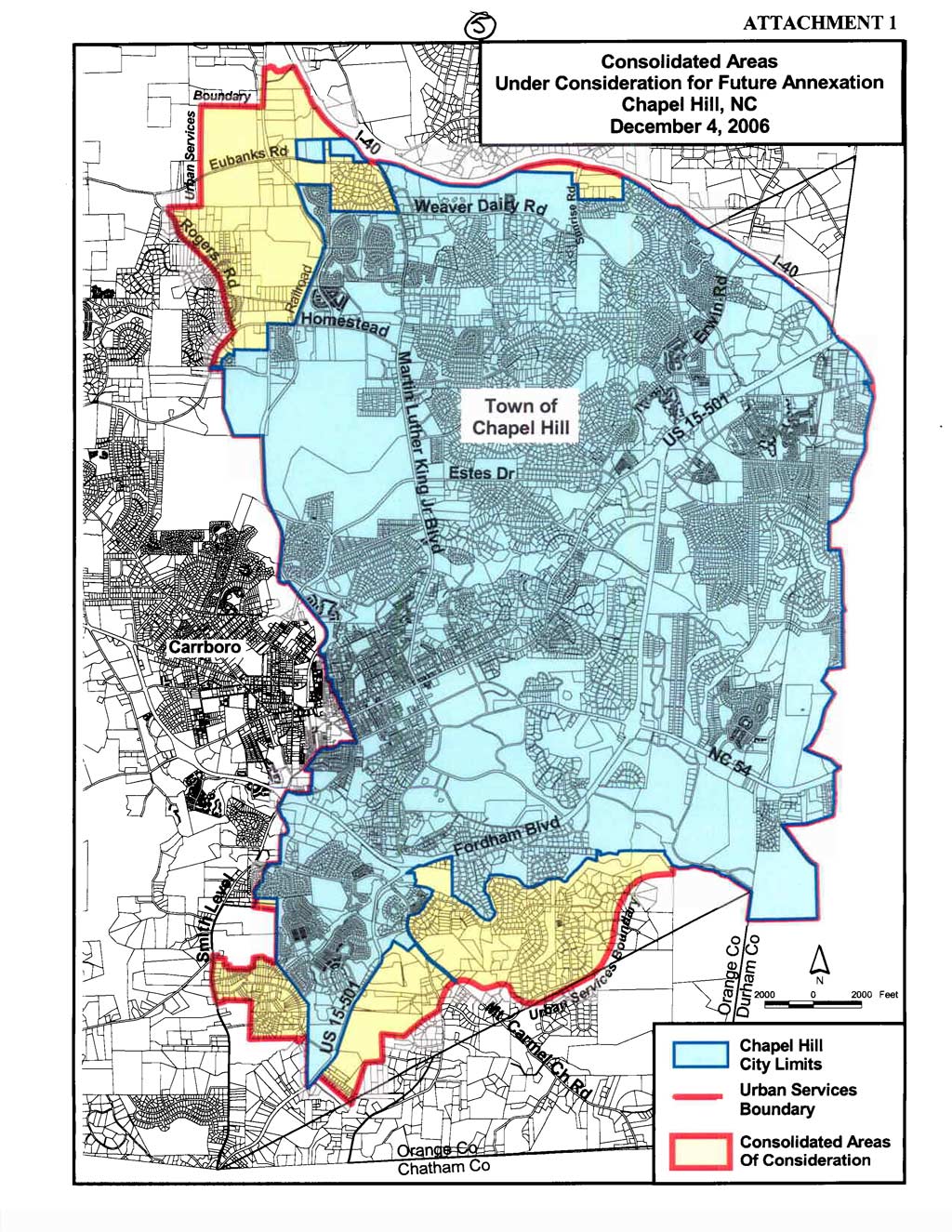
This Monday (Dec. 4th), Council will take up the composition the Roger Road Area Task Force, I posted on earlier, and the possible future annexation of the eastern side of Rogers Rd.

If you’re interested in working with the Rogers Road community to correct these longstanding problems, Monday would be a great time to turn out and let your views be heard.

Click images to expand.

GoogleEarth Experiment: RAM Development Flybys

This is still very raw, but I thought I’d put out this demo to stir some thought within the community. Visualization tools like GoogleEarth (GE) can help remove some of the difficulty in assessing the visual impact of new development.

Our town’s planning department has the raw data needed to create a GoogleEarth representation of our town which I plan to massage and then release into the public domain for other citizens to elaborate on.

Why GoogleEarth?

While GE is a proprietary tool, the datasets it uses are exportable. So, Google owns the tool, not the data.

Our planning department should be creating GE or NASA Wind World representations of Chapel Hill as a matter of course – it would help both them and the community create a common visual-based framework for development discussions.


The free and OSS tools used:

GE has a movie making module but that requires an upgrade to GE Pro at $400 per year (not quite ready for that…)

Downtown Development Initiative: Where’s the beef?

[UPDATE]

How could the negotiations team done a better job informing the public throughout the process?

Here’s two examples from Greensboro’s District 5 Council member Sandy Carmany covering their coliseum issues, this one from a year ago and this one from November.

Sure, she wasn’t hampered by reporting on material potentially shielded under NC’s open meetings laws, but, then again, not every decision or thought process going into RAM’s “new” deal was by necessity shielded.

The only Council member directly involved in the negotiations, Sally Greene, has done the best informing the public of her thinking process on Lot 5 though nothing I read prepared me for such a right turn.

Original post:

Council had an excellent opportunity over the last week to answer the critics of the new Downtown Development Initiative Lot #5 deal.

Over the Summer, the public’s investment in the deal ballooned 15-fold, from $500K to north of $7.2M (with additional revenue hits, etc.). The Wallace Deck portion excised. Public space diminished. Boutique shops up, affordable commercial space missing. $385-$415 per square foot property, slated, as one critic pointed out, probably for affluent student housing.

What, over the Summer, caused the deal to change so radically for what I, other downtown business folks, two Kenan-Flager business school professors and many other concerned citizens consider the worse?

Council could’ve released more information – to provide a solid foundation for the public’s understanding of “the deal”. I’ve followed this deal quite closely. I agreed to “bite my tongue”. to not criticize the problematic elements of the original deal, to wait on the “new deal” which would correct the more egregious of the public’s concerns.

I’ve spent hours trying to pull together all the whispers, hints, etc. that incidentally wafted the public’s direction over the course of the Summer. But what I have is not enough.

The Council has the responsibility and obligation to fully disclose the details, to the fullest extent
allowed by law, of this deal.

Mr. Manager, Mayor and Town Council,

Thank you for being more timely this week and publishing the RAM development agenda item before close of business. Unfortunately, the agenda item is fairly light on the background of the “new deal”.

Would you please publish the remaining reports, discussions notes, comments, etc. that went into forming the “new deal” over the Summer?

I know that there’s some legal issues involved in releasing all of the notes – legal issues that will become moot after you sign the deal – so I’m not asking for ALL the information now (though I will be exercising a citizen’s FOIA prerogative ASAP).

I’m asking that you release everything you can prior to the meeting, including information not protected under the confidentially agreement but also not,to date, publicly disseminated.

For instance, would you please provide details of your consultations with the Local Government Commission (LGC) on financing?

This would include notes, reports, detailed analysis, etc. Please be thorough in your disclosures.

I’m interested in the LGC’s take on leveraging the secured debt, effect on our town’s debt ratings, thoughts on the quoted interest rate, etc. Essentially, I imagine, the same kind of financial analysis that a private business uses in evaluating the risk-rewards of taking on debt.

Finally, the main conduit for publishing this data has been the DDI website which hasn’t been updated since Spring. I’ve asked the Council to update the information on the RAM deal in a timely fashion. Several folks told me to “hold my horses”, that I needed to wait until the “final” deal was set.

Well, the final deal is set and the public still doesn’t have those details. I was hoping that this issue would be addressed over the last 9 days but it hasn’t.

The public has one weekend to review these critical additional details.

Please, if you can’t update the website, then submit them to the citizenry directly. If emailing or providing paper copies is easier, that’s fine.

I’ll make sure they get into the public domain over the weekend.

Thank you for your prompt attention,

Will Raymond

Chapel Hill Downtown Development Initiative: The Debate

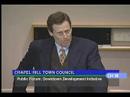
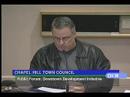
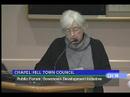
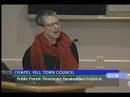
Posted these individual citizen comments from the Nov. 20th Public Hearing on the Downtown Development

CHFD: First Class Firefighters

From the Chapel Hill Fire Department website:

The primary mission of the Chapel Hill Fire Department is to protect life, property and the community environment from the destructive effects of fire, disasters or other life hazards by providing public education, incident prevention and emergency response services.

Thank you folks for all the long hours and hard work.

If for some reason you missed the official announcement , our Town graduated its first class of firefighters Aug.11th.

Lucky for us, youTube’s RyanJef recently posted this movie to celebrate


7/28/2006 – The Chapel Hill Fire Department will graduate its first Fire Academy in 13 years at 7 p.m. Friday, Aug. 11, in the Council Chambers at Town Hall, 405 Martin Luther King Jr. Blvd. The graduation will include a badge pinning ceremony and presentation of awards.

To attract more candidates and improve workforce diversity, the Fire Department has begun to provide training; previously, new hires were already-certified firefighters. Candidates are selected through a multi-step process of testing, including physical exams, agility tests, interviews, background checks, and application reviews. The academy, which began April 18, included 16 weeks of training in areas including basic firefighting, hazardous materials, emergency medical response, basic rescue, child safety seat installation and physical fitness. Graduates will be North Carolina-certified Level II Firefighters.

The graduating class includes 10 Chapel Hill firefighters, one Efland firefighter and one Parkwood firefighter. Four of the new firefighters will replace current vacancies, and six will fill new positions that were authorized by the Town Council in 2005. Three will be assigned to Fire Station 2, and three will be assigned to Station 3.

The Town Council has authorized an additional six new firefighters in the coming year, and the next academy will take place in April 2007. Applications will be accepted beginning in November 2006. To find out more, visit the Town website at www.townofchapelhill.org/fire,or contact the Chapel Hill Fire Department at (919) 968-2781 or fire@townofchapelhill.org.

Thanks RyanJef.

Downtown Development Initiative: Stanford on a Sea of Asphalt

Early in the evening, downtown resident Don Stanford spoke of “magic bullets”, the promises of NCNB Plaza (“remains one of the eyesores of Franklin Street…”) and the progression from it to Rosemary Square to Granville Towers (“…high rises in a sea of asphalt…”) to Wallace Deck.

During his presentation I noticed some eye-rolling but it’s hard to dispute his observation about Lot 5’s character:

This design doesn’t have anything to do with Chapel Hill. It doesn’t have anything to do with North Carolina. It doesn’t have anything to do with the South. I defy you to find anything [about the external design to] determine in any manner anything about it that says Chapel Hill or college town.


[Movie]

Municipal Networking: Nary a Citizen Advocate to be Found

An update on the muni-networking task force prepared by UNC’s Shannon Howle Schelin, PhD, one of our stronger advocates for 21st century infrastructure.

On November 13, 2006, an exploratory meeting was held at the Town of Chapel Hill to discuss the Town’s interest in pursuing a wireless strategy. The goal of the meeting was to determine a strategy for investigating the broad issues related to a wireless initiative in the Town, as well as to seek the in-kind support and expert guidance of the University of North Carolina (UNC), the UNC School of Government (UNC SOG), and the NC League of Municipalities (NCLM). External participants participating in the meeting included John Streck, UNC, Shannon Schelin, UNC SOG, and Lee Mandell, NCLM. Internal staff members participating in the meeting included Roger Stancil, Flo Miller, Bob Avery and Arek Kempinski.

The preliminary minutes and associated outcomes of the meeting are offered for your review and comment.
The external participants were briefed on the interest of Town Council and citizen advocates in pursuing a wireless strategy for Chapel Hill. The majority of the conversation centered on the “why” question—as in “why is Chapel Hill interested in undertaking such an effort?” The drivers for the wireless strategy were articulated as follows:

  • 1. Addressing the digital divide;
  • 2. Increasing citizen access (in-home service)
  • 3. Increasing mobility (ubiquitous access in public areas—i.e. downtown);
  • 4. Improving governmental operations (public safety and public service); and,
  • 5. Economic development.

Based on the conversation, the following suggestions and commitments were made by UNC, UNC SOG, and NCLM

  • 1. The interest of the Town Council and citizen advocates does not specifically presume a “wireless” solution, but rather, a “connectivity” solution of which wireless is one component.
  • 2. The “why” question is multi-faceted and each component needs to be studied individually in order to create a comprehensive connectivity plan.
    • a. For example, licensed radio frequency (4.9 GHz, etc) is a robust, 802.16 alternative that is specifically designed for public safety and public service but is unavailable for citizen use. However, the lack of interference that is provided by the licensed spectrum creates significant advantages in data speed, accuracy, reliability, and security—all of which are vital to the development of any mobile government applications.
    • b. Another example is the extension of a wireless network into low-wealth communities without the provision of equipment used to access the network will not have the desired impact upon the community.
  • 3. The external participants, UNC, UNC SOG, and NCLM, agreed to work as a team, with the involvement of the Town staff, to examine the components and drivers of the “connectivity” request that has been generated by Town Council and citizen advocates. The outcome of this work will be a comprehensive listing of the drivers and requisite solution alternatives for each issue.
  • 4. The request to identify additional drivers associated with the connectivity request was made at the close of the meeting and will be gathered by Town staff through conversations with Council Members.
  • 5. The team will convene to begin its work after the Thanksgiving break.
  • 6. In addition, upon completion of the plan, the team will advise the Town Council and staff on the technological, financial, and legal issues surrounding the various solutions that will compose the Connectivity Plan.

Additional feedback or comments on this meeting or the steps outlined for proceeding are appreciated.

Originally tonight’s Council agenda seemed to indicate a discussion on forming a broader task force was on the docket. Now the item is “informational”.

A shame, as I was planning to make a few comments about the lack of citizen advocates within the current discussion and trumpet the continuing successes of other locales, like St. Cloud Florida’s comprehensive effort or Minnesota’s St. Louis Park educational outreach.

Downtown Initiative: $500,000 here, $7.3 Million there, pretty soon we’re talking real money…

A quick reminder of this evening’s public forum [Mon., Nov. 20th] on the failing Downtown Initiative.

Tonight’s agenda starts with this gem

The 2000 Comprehensive Plan’s goal for downtown is to “enhance the downtown’s role as the center of the community, with a pedestrian orientation and a human scale.”

I consider the 104′ multi-building development on lot #5 to be a stake through downtown’s heart. I’m not alone. Many residents find the scale of this development anything but “human”.

Former Council member David R. Godschalk, the Stephen Baxter Professor Emeritus in UNC’s City and Regional Planning department, waved the redflag in 2005 claiming

The developer has put too much building on these two small parcels. The nine-story building on lot 5 is out of scale with the existing downtown streetscape and soars above the 90-foot height allowed in the town center 2 district of the Chapel Hill zoning ordinance.

Scale aside, why else is the Downtown Initiative failing?

  • Redevelopment of the blighted Wallace Deck and adjacent lot – off the table
    • “As a result of these material economic changes, the Town Negotiating Committee and the Developer have reevaluated the proposed Lot 5 and Wallace Deck projects.
    • Reevaluated? The Wallace Deck improvements, the real honey for this bee, are GONE.
  • Lease amount dropping from $7.9 million TO $1 (ONE) DOLLAR per year
  • Taxpayer contribution increasing 14.6 times, %1360 – from $500,000 to $7.3 million
  • Moving from a manageable $500K out of “on-hand” funds to $7.3 million
    • supposedly borrowed at %5
    • sum added to our Town’s current debt
    • impacts our debt ratio, bond rating and forward ability to borrow
    • “the Town would incur an estimated annual debt service cost of $725,000 in the first year, decreasing annually by about $18,000”
  • RAM’s original equity investment of $23 million has dropped to $12.5 million – nearly %50 drop in equity investment, though, on the plus-side, it’s upfront money.
  • Borrowed monies using COPs financing mechanism – a secured debt normally reserved for essential building
    • COPS (“certificates of participation” [PDF]) are usually used to finance essential buildings and projects (sewer, water, schools, etc.)
    • My research to-date indicates the dominant private-public partnership using or proposing COPs in NC are prisons, coliseums. convention centers, etc.
    • Town income directly affected – “Revenues to pay the debt service on the proposed borrowing would be property taxes, sales taxes, and parking revenues above those we are currently receiving.”
  • Shrinking PUBLIC SPACE – from 31,000′ in the original proposal, to 27,215′ (no published usage patterns – Are we accepting RAM’s restrictive idea of “public”?).
  • Missed opportunity for internal space for public use – arts facilities, museum, etc.
  • Commitment to provide affordable commercial space for local economic development is missing.
  • No commercial space for an integrative tenant, like a grocery store, that reduces off-site travel by the condo-residents and draws folks in from surrounding neighborhoods.
  • After 50 years, the developer gets a “sweetheart” deal to acquire the land and air rights for $2 million (imagine the value of that property 50 years hence).
  • Developer is supposed to find 10-15 additional on-street parking spaces (the incredible difficulty of doing the Downtown Parking Task force, of which I’m a member, just discussed).
  • “Owners” of affordable housing units HAVE TO LEASE OFFSITE PARKING, 21 spaces rented at below market rates.

The deal with RAM Development was never very good, at least for the Town. RAM’s payment of $7.9 million ($4,750,000 to lease Lot 5, a one time lease payment of $3,150,000 for the air rights over the Wallace Deck and the Rosemary/Henderson street lot) was a steal of a deal.

$7.9 million for 99 years of use of citizen-owned, prime downtown real-estate? Incredible.

$99 for 99 years? Impossible!

Several folks pointed out that RAM’s original projected rate of return, less than %3, was financially infeasible and would have to be “re-traded”. Last year I publicly stated that RAM had over-promised and would under-deliver – that dramatic renegotiation upwards, more inline with Grubb’s competing bid, was an inevitable result.

For instance, I work on the corner across Church St. and remember well the Devil’s own time the construction crew had digging my building’s basement. I never bought into the idea the Town would only pony up $500,000 to build underground parking structures in the granite ladened Lot #5 – and I sure as heck found it difficult to believe that RAM, our Council members or any other longtime residents would buy this malarkey.

When I brought this and similar issues up with our leadership, both then and since, I was told “not to worry” and “the deal is the deal”.

Why should the citizens of Chapel Hill pay the piper? Remember how “thrilled” RAM was to get a piece of Chapel Hill’s action?

In the most stark example, Grubb’s financing model would produce a 21.77 percent return on its $10.5 million investment in condominiums on the Wallace Deck site. Ram sees only a 2.98 percent return on its $23 million investment there.

“If they’re willing to do it for that,” Harris said, “God bless ’em.”

Even if the company wanted to, Grubb couldn’t make a counteroffer, Stainback said, explaining that the proposals are considered “best and final offers.”

Two council members asked Cummings whether Ram’s financial model was too good to be true.

He said no projection ever is exactly right but that his company hopes to ride the growing trend of people returning to downtown.

After the meeting, Ivy Greaner, Ram’s managing partner, said the profit margins are healthy enough to sustain the project.

But Ram also is seeking a foothold in North Carolina. The company is willing to make less money in Chapel Hill to get a centerpiece project in the Triangle.

“This is a special town,” Greaner said, in a suitor’s tone. “We love Chapel Hill.”

N&O

Guess the Chapel Thrill has worn off for RAM. We’re special, just not $7.3 million special.

The Town and Ram claim costs have unforeseeably skyrocketed in the last year

In the time that has elapsed since the Developer formulated the development plan for Lot 5 and the Wallace Deck sites and the Town negotiated the October 24, 2005 MOU with the Developer, construction costs have increased by as much as 30 percent and interest rates have increased significantly.

yet we’re supposed to accept that the other rosy projections, like a %5 borrowing rate and an above average return on parking fees, retail and property taxes will pan out?

Since the original deal was inked, the national average cost of building materials hasn’t exceeded %11, with a recent flattening (due to lower energy, aggregate and raw material costs) of an annualized increase between %5 and %7.

Worse, last October, after closing the deal (N&O), Keith Cummings, president of Ram,

…personally guaranteed with his own money that the project will be completed as planned, according to the document signed Monday. Any increased costs — because of issues such as the rising price of construction materials — are to be borne by Ram.

Personally guaranteed.

Come on, I feel like the Town’s citizens are being taken to the cleaners on this deal.

Until I see the specifics of the %30 increase, I must assume it was part of the “shell game” of under-bidding to win the contract.

If this turns out to be the case, what must we expect of RAM’s projections (“guarantees”) concerning their luxury, mega-condo development – the largest in Town’s history – at 425 Hillsborough Street?

And once we’re hip deep into this development, what restricts RAM from coming back to the well? Quite frankly, while I’d hate to “throw away” any taxpayer investment, it certainly would be easier to back out of a $500K losing proposition than a $7.3 million boondoggle. The modest protections of paying on delivery don’t seem sufficient.

The return of the public’s investment better be phenomenal to justify this private-public partnership. With this project’s current fiscal track record, financial prudence, above all, should steer our leader’s decision, especially when we go against our Town’s tradition of letting the voters decide to take on such massive financial obligations.

Speaking of prudence, beyond the $7.3 million demanded by RAM, the Council is supposed to approve a major chunk of debt tonight for the Homestead Park Aquatic Center. As today’s HeraldSun reports

The next key step comes tonight, when the Town Council will consider approving a contract with the Resolute Building Co. to build the Homestead Park Aquatic Center. The contract on the table is for $5,238,000, although the town manager would be authorized to approve up to $530,000 in change orders if necessary, as the work proceeded.

In the town’s 2006-07 budget, the council authorized borrowing another $750,000 for the Homestead project. That’s in addition to the bond funds the town and Orange County both are allocating for it.

Orange County is putting about $4.3 million into the project in bond funds approved by voters across the county, and Chapel Hill is contributing about $1.2 million in bond funds.

That’s nearly $2 million of debt we’re taking on – with a possible upward tick already projected. Strange that the citizenry had a voice in taking on that $2 million obligation, but we’re left out of directly approving an amount 4 times as large.

I’m going this evening with my concerns, fully expecting Council to answer each issue fully before moving forward. Hopefully the missing issues of public access, accommodations and facilities will be covered.

Here’s the “new deal” being proposed this evening.

  • Town leases building pad to Developer under Ground Lease for a term of 99 years (the “Ground Lease”). Rent under the Ground Lease will be $1 per year plus the various benefits the Town will realize from the development of the Lot 5 Project, including but not limited to public space to be developed by the Developer at its cost but owned and operated by the Town, public art corresponding to 1% of the total cost of the project, affordable housing that will be required to be subsidized by the Developer, LEEDs certification of the project, the additional cost of placing the Condominium Parking underground, the enhanced tax base, and the general economic developments that will be generated for the entire downtown area.
  • The Developer shall have the right, which shall be assigned to the condominium association upon turn-over, to terminate the ground lease and acquire fee simple title to the land and/or air rights on the date that is 50 years after the commencement of the ground lease. The termination fee shall be $2 million.
  • The Developer will construct approximately 137 for sale condominium units (15% of which shall be affordable for a total of 21 affordable units) and approximately 28,540 square feet of retail.
  • The Developer will construct, pursuant to plans and specifications approved by the Town, the public plaza/public space aggregating approximately 27,215 square feet. All of such public space will be owned and operated by the Town.
  • The improvements on Lot 5 will be LEEDs certified.
  • Developer will construct an underground parking garage below the condominium/retail building containing approximately 161 parking spaces (the “Town Parking”) that will be available to the general public including retail patrons (i.e. no monthly rentals). The remaining parking spaces aggregating approximately 169 will be allocated to the owners of the condominium units (the “Condominium Parking”).
  • Developer and the Town will seek to secure appropriate permission for an additional ten (10) to fifteen (15) on-street parking spaces that will be allocated to the Town.
  • The Town Parking would be located on the first level of the underground parking garage and the Condominium Parking would be located on the level below the Town Parking.
  • Upon completion of the parking garage, the Developer will convey to the Town, fee simple unencumbered title to the Town Parking at a purchase price equal to $7,245,000, which represents Developer’s current estimate of the cost to design, permit, finance, plan, supervise, and construct the Town Parking (“Town Parking Costs”). Developer agrees to provide documentation as may reasonably be required by the Town and the Local Government Commission to assist with the financing of the purchase of the Town Parking. The Town may, at its option, elect to audit the Town Parking Costs and in the event said costs are less than $7,245,000, the Developer shall refund the excess amount within 30 days of demand thereof. In the event the audit indicates that a refund is due, the Developer shall also reimburse the Town for the cost of the audit not to exceed $20,000
  • Parking for the affordable housing units will be provided by the Town at the Wallace Deck or other Town-owned property. A below market rental rate would be charged for such parking.
Carolina North: The Invisible Discussion Forum

[UPDATE] As of November 20 2006 4:45 pm, we’ve had two questions and two comments by “site admin”.

Questions:

Hi, I haven’t seen anything lately that lays out the architectural vision of Carolina North. Could you point me towards any current plans? Thank you.
November 20 2006 9:46 am by Robert Peterson

Is UNC still planning to realign Estes Drive as part of Carolina North development? Shouldn’t changes so potentially disruptive be discussed with the community that depends on that road as a major arterial connection?
November 20 2006 9:28 am by Ruby Sinreich

The comments referred to the “Attendee Comments Received at the Ecological Assessment Listening Group Meeting With Biohabitats Inc., Nov. 6, 2006” and “two maps created by Biohabitats of Raleigh. The maps were marked up in the Ecology Listening Session on November 6.”

Good notes that haven’t been previously published on UNC’s Carolina North site or on the UNC-LAC mailing list (at least the one I’m a member of).

Not exactly answers to either of the questions or to my earlier third question on forum rules but a response all the same.

[ORIGINAL]

Did you know that UNC has created an online discussion forum?

Hey, I wouldn’t have known but for this email:

Hello all,

I’m writing to let you know that the public discussion forum for Carolina North is now accessible online at http://research.unc.edu/cn/view_comments.php. If you would like to post a comment, click the “leave a comment” link at the bottom of the page, and you’ll be asked to register your name and e-mail address. Once registered, you’ll receive a confirmation e-mail, after which you can post comments.

Thanks,
Colie Hoffman
Office of Information and Communications
962-6137

which didn’t appear on the normal UNC Carolina North LAC (Leadership Advisory group) email list – a list, by the way, which you can get on ONLY by contacting UNC here (no “self-subscribing”).

UNC’s Carolina North group has done a fairly decent job on their, admittedly biased, main website, including posting timely videos and minutes of the Carolina North Leadership Advisory Committee (UNC-LAC) meetings.

Creating a discussion forum is a bold step for the development folks in Moeser’s administration, so points for trying, but 8am to 5pm EST moderation kind of misses the mark.

Please be aware that we only add new comments to the discussion forum during regular business hours (Monday through Friday, 8:00 a.m. to 5:00 p.m. EST).

Given that, I still wanted to heap credit on UNC for this apparent e-democracy effort but the lousy advertising and the the lack of forum rules (possibly undercutting open debate) really make that difficult.

Disappointing. Mustn’t let Moeser’s “freelance dissenters” engage in free form discussion ;-)!

Hey, I registered,

Your registration was submitted successfully. You will receive an email from “HTTPD Daemon” containing a URL that will allow you to view and participate in the Carolina North public discussion forum.

and added this question, “What rules of moderation will you be applying to this forum?”

Wonder how long after 8am, Monday, Nov. 20th, 2006 I’ll find out…

Fish, Fowl, Eyeballs, Journalist: None of the above?

My Nov. 4th Chapel Hill News column was kind of choppy this week. I guess one of the “nots” I can add to the list is a paragon of brevity. Some folks use the term “citizen journalist” to describe what I’m doing on CitizenWill – a description that hasn’t quite jelled into a term of art.

Whatever I’m doing, both the ACLU and Electronic Frontier Foundation are working hard to protect my right to do it, please consider
Support Bloggers' Rights!supporting Bloggers’ rights.

###

I am not a journalist.

Sure, I’ve written guest columns for the Herald Sun, the Daily Tar Heel, and now, full circle, for the Chapel Hill News. But that does not make me a journalist.

Self-published, some of my online work falls under the rubric of “citizen journalist.” Yet that loosely applied classification carries little gravitas in the world of politics and governance.

My ruminations require primary research, occasional interviews, analysis – behaviors associated with trained journalists. But my posts, though sometimes grist for the news, lack the institutional news outlet imprimatur.

And, always, I bring my acknowledged point of view. Not crafted by publishers, editors, advertisers, media marketers — my interests and passion dictate my content.

At Greensboro’s recent unconference ConvergeSouth, professional journalists, online activists, performers and readers, discussed the current consequences of new media enterprises — the corrosive, even subversive, effects of the personal printing press on the venerable Fourth Estate – and speculated on what is yet to come.
Continue reading Fish, Fowl, Eyeballs, Journalist: None of the above?

Signs, Signs Everywhere Fewer Signs?

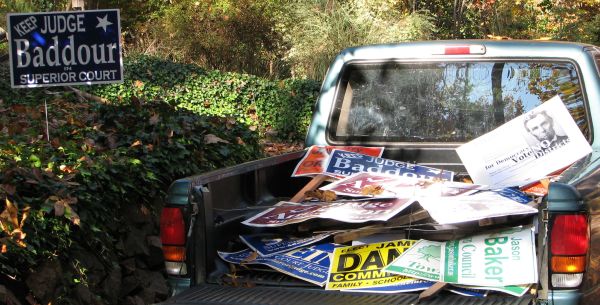
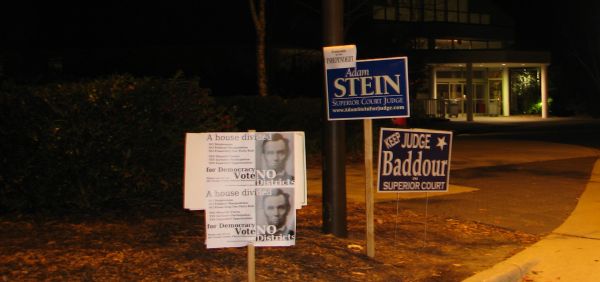
Made a quick 18 mile cycle through the major municipal precincts, along major roads, ramps and intersections last night to pick up some signs for a few candidates plus my Honest Abe NO on the referendum.

Baddour’s supporters, considering the incredible number of his signs, seemed to have done an excellent first pass. Continue reading Signs, Signs Everywhere Fewer Signs?

Election Day 2006: Hogan Farms and Beyond…

Covered Hogan Farms from 6:45am to 9:45am. BOCC candidate Jamie Daniels was handing out material until roughly 9am. Stein supporters covered the precinct from 7ish on. The Democrats staffed a table handing out sample ballots the whole time I was there…

As of 9:35am, 300 confirmed voters with another 10-15 milling about waiting to go. When I called in to report the numbers to O.C. Democratic headquarters, was told the 10am figure was 369.

Hogan Farms has a nice setup – including hot coffee. A welcome bit of hospitality considering the temperature and rain began falling in earnest as I left. Judge Baddour was getting some good support. So to folks voting NO on the districting referendum. A welcome surprise.


2AM Chapel Hill Library – Prepping Signs

[UPDATE: ] Moved the rest of the photos here.

The rain has let up a bit. I’m hoping most of it has swept through by 4:30pm when Elijah and I start working Chapel Hill library (Estes Hills – my home precinct).

Please Vote Tuesday, November 7th, 2006

For my RSS reading readers ;-)!

Find your precinct HERE .

Please vote Tuesday, Nov. 7th. Polls are open 6:30AM until 7:30PM.

  • Vote NO, NO, NO on either of the divisive Orange and Chatham county districting referendums.
  • Vote YES for Baddour and Anderson Superior Court District 15B.
  • Vote YES for Vanderbeck commissioner Chatham District 4.
  • US Congress District 4: Wish I could write-in Kanoy
  • State Supreme Court Chief Justice: Parker
  • State Supreme Court Associates: Timmons-Goodson, Martin and Robin Hudson (over Calabria based on tenor towards capital cases)
  • State Court of Appeals: Bob Hunter and Stephens
  • State Senate: Kinnaird
  • Orange County Sheriff: Pendergrass (like Parker’s emphasis on reducing turnover and using technology but unsure about other issues)
  • Soil and Water Conservation Supervisor: Snipes and Shooter

Precinct locations for Orange County and SAMPLE BALLOT
Precinct locations for Chatham County and SAMPLE BALLOT

Note precinct changes: More information here.

  • Battle Park precinct votes at the Chapel Hill Senior Center 400-A S. Elliott Road Chapel Hill for the November 7, 2006 Election only.
  • Coles Store precinct have been split into two precincts.
    The School Districts divider line determines your precinct and voting location:

    • If you live in the Orange County School District (to be known as Coles Store 1 Precinct), you will continue to vote at the Union Grove Methodist Church, 6407 Union Grove Church Road, Chapel Hill, NC 27516.
    • If you live in the Chapel Hill/Carrboro School District (to be known as Hogan Farms Precinct), you will now vote at the Lake Hogan Farms Clubhouse, 101 Commons Way Dr, Chapel Hill, NC 27516.

The Superior Court District 15B candidates are:

Baddour and Stein 3rd Quarter campaign finance reports.

Fox’s 3rd quarter report [PDF] was available by Friday.
Anderson’s 3rd quarter [PDF] just today (Nov. 6th) [UPDATE:] Tom Jensen on OP informs us that the report was available Saturday.

Videos and commentary on Oct. 11th’s Superior Court District 15B UNC Young Democrats forum.

Videos and commentary on Oct. 16th’s Superior Court District 15B Bar members forum.

Sign, Sign Everywhere a Sign…

This time last year I was catching 14 winks in preparation for election day.

Earlier in the evening I had made the rounds collecting my outlying signs for redeployment. About 3 hours from now, I was leaping out of bed to fill some balloons, say a hasty goodbye to the family and rush to pick up local activist Tom Jensen ( thanks again Tom for kindly assisting with the last round of sign deployments at every municipal polling station).

It was the start of one of the longest days in my life. Exhilerating, enjoyable, extraordinary, engaging – the hospitality and good cheer of the citizens of Chapel Hill made the long hours fly by.

The beautiful fall weather was an incredible bonus.
Continue reading Sign, Sign Everywhere a Sign…

Vote No on Orange County Districting Referendum, Another No from Katz

A resounding NO from former Orange County Democratic Party chair Barry Katz in his Oct. 28th LTE to the Chapel Hill News:

I will vote no on the ballot referendum to restructure the Orange County commissioners.

First, there hasn’t been enough public debate on the merits of change, and I oppose change without voters’ understanding its consequences. Second, since the mid-1930s, The Chapel Hill News has reported countywide contests between candidates in favor of funding schools, health clinics, etc., and candidates who oppose raising taxes to fund such services. Most years the pro-funding candidates win and they do it with support from all parts of the county, albeit with greater support in southern Orange. So this is an old story.

Third, my six years on the county Planning Board suggests to me that underlying the push to change how county commissioners are elected are residents who are concerned about “restrictive” land-use planning and the rights of landowners to do what they want with their land. I joined the board as a skeptic regarding land-use planning and left a confirmed proponent of strategic land-use planning. We have only to look at Wake County to see how unregulated growth leads to urban sprawl, a lack of public transportation and too little public open space.

Orange County has been in a decades-long urban-suburbanizing transition that will continue past my lifetime. Agriculture now accounts for about 1 percent of the county’s economy, but the value of agricultural land has skyrocketed in recent decades due to residential housing demand. “Recent residents,” i.e., people whose grandparents weren’t born in Orange County, constitute a strong majority of voters and now determine the outcome of local elections, as is only proper. Not only would new and future Orange residents benefit from planning, but agricultural landowners would enjoy sustained maximum land values if the quality of life stays high in the county, as would occur under a thoughtful land use plan.

I hope landowners recognize the practical truth in this notion. — Barry Katz, Chapel Hill